By Rory
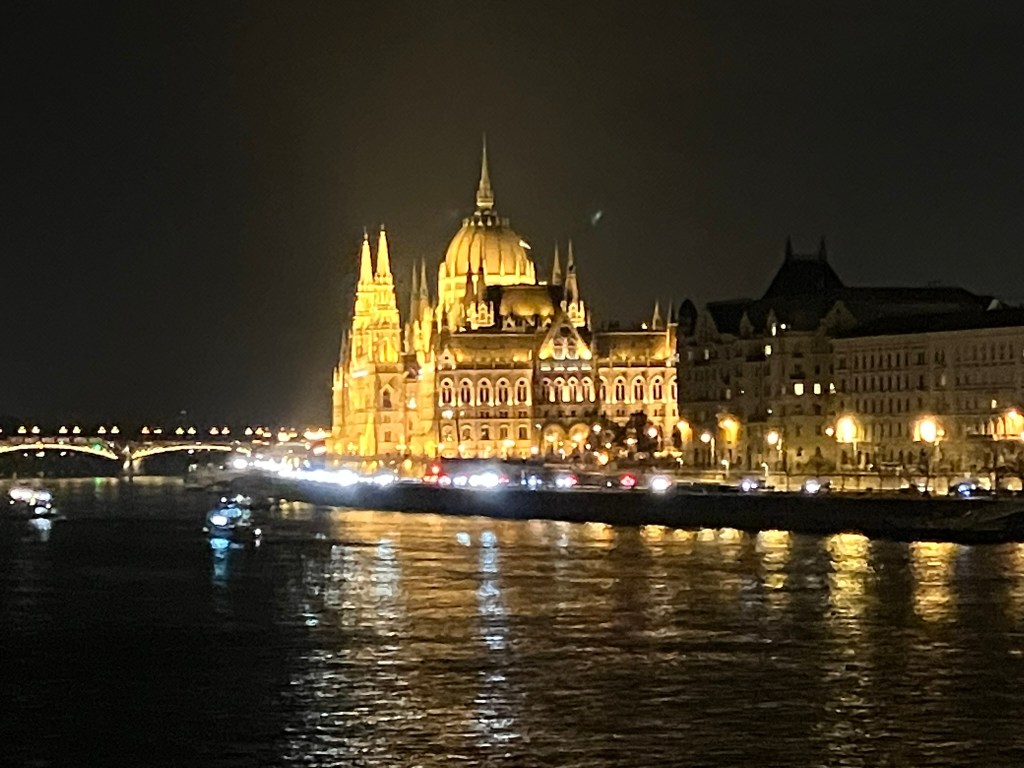
The seat of power–the Hungarian Parliament building and the Danube River.
It’s been about 6 months since our last dispatch–it’s been a busy time with a lot of guests in the summer followed by trips to the U.S. for both of us in the fall. But most recently we took a two week trip all around what the Magyars (Hungarians) call “Magyarország,” but what English-speakers know as Hungary. The reason for the big difference in the names is that Hungary is derived from the Medieval Latin word for the place, but the most prominent tribe in the region are the “Megyer” people. Hence the name.
Hungary is a land-locked nation to Slovenia’s east. It’s interesting in that Hungarians are ethnically distinct from the Slavic people in countries like Slovenia (as well as Poland, Czechia, Russia….), and have a language that doesn’t resemble the Slovene that we’ve been struggling to grasp. So while Hungary is close to Slovenia, the culture is wildly different than what we’ve become used to.
What’s also interesting and tragic about Hungary is their history of being dominated and beaten back by the Ottomans, the Austrians, the Russians, and the western allied nations after WWI. Yes, they are now a part of the European Union and NATO, but these are complicated relationships and the country is not fully on board with either of them. The phenomenon of Viktor Orban did not come out of nowhere–there are some deep-seated nationalist resentments among some that Orban has exploited.
As a place to visit, though, it’s a wonderful trip through history, and we found that the people, wine, food, architecture, and the art were definitely worth a two-week excursion. Where we went….
Tokaj
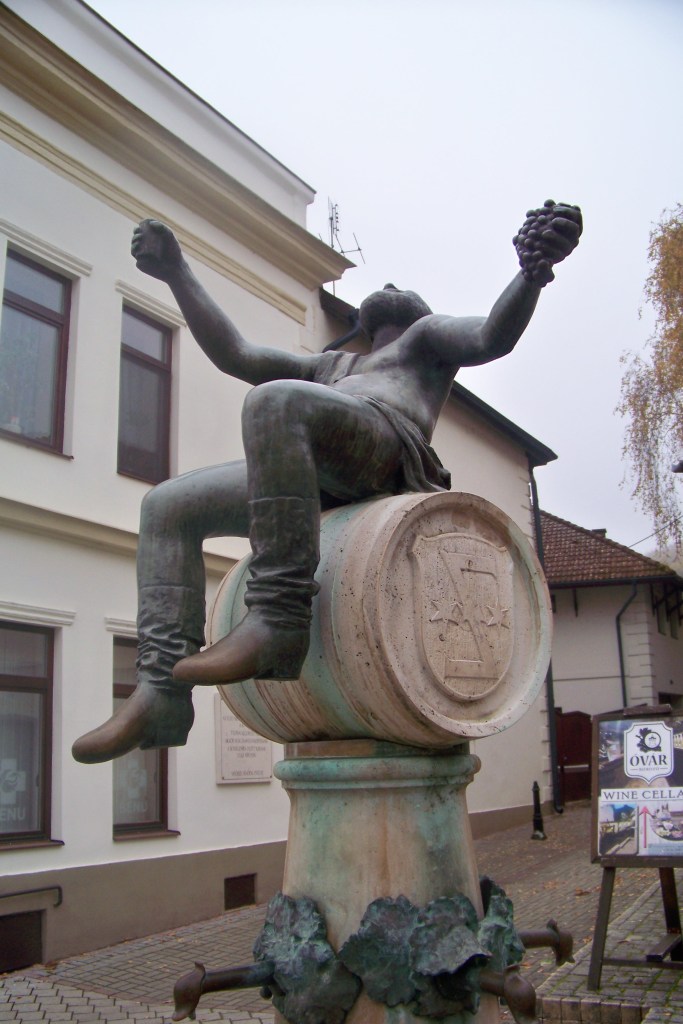
‘Bacchus in boots’ statue in the center of Tokaj. It’s all about the wine.
After a long day riding two trains to the far northeast of the country, we arrived at the town of Tokaj. This town is famous for its wine production, specifically it’s white wines made from the the Furmint grape, including the famous sweet Tokaji Aszú dessert wine . Among the historical notables who have sought out wines from this region were Russia’s Catherine the Great and Austrian composer Joseph Haydn. The first thing we found when we arrived is that the entire center of town is completely torn up–apparently the Hungarian government has decided to invest big money into making Tokaj a big tourist destination.
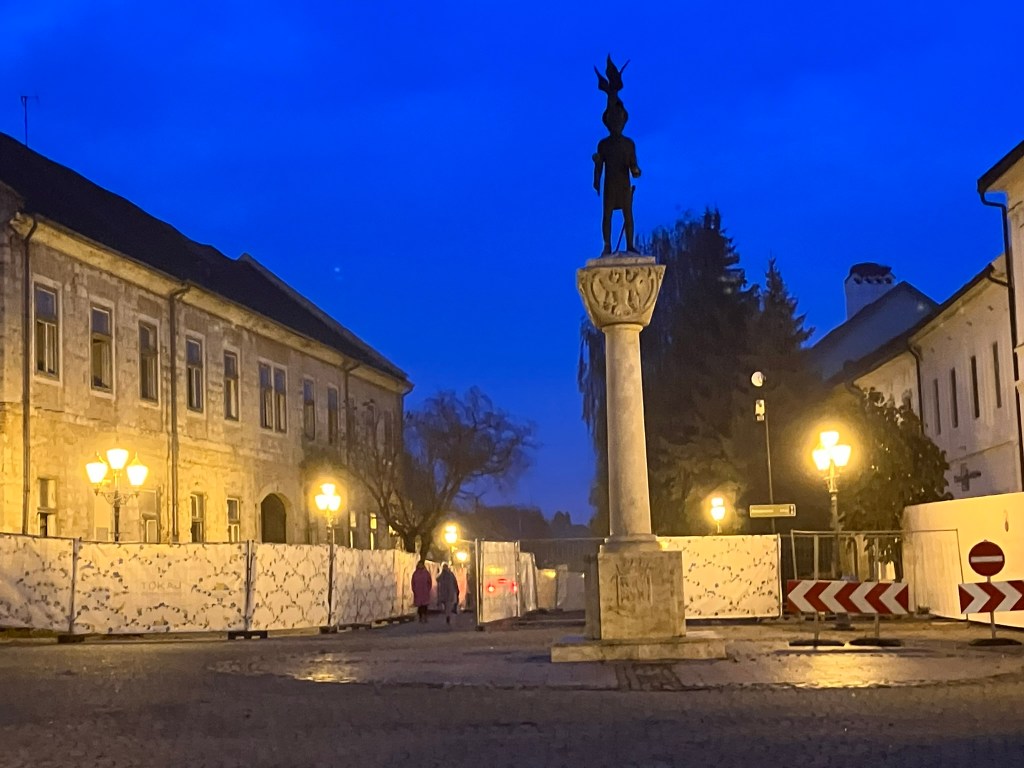
Central Tokaj, with barricades.
In the meantime, much of the city is covered in barricades, scaffolding, and cranes are actively renovating some of the old buildings and cobblestone streets. None of which stopped us from visiting a couple of wine cellars for tastings, and visiting the museums which are all about the wine making and the history of the region. One of the wine makers had studied viticulture in Sonoma, and married a man from Napa before coming back to Tokaj to take over the family winery with her brother. It was fun discussing Northern California viticulture in this remote corner of Europe. Some photos….
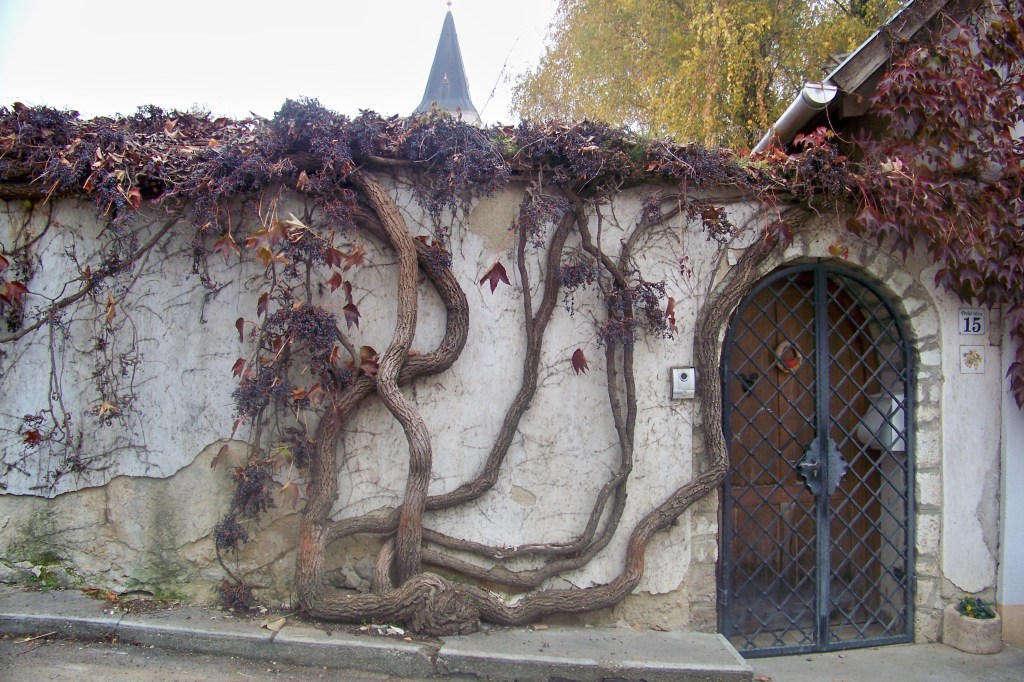
Grape vines everywhere.
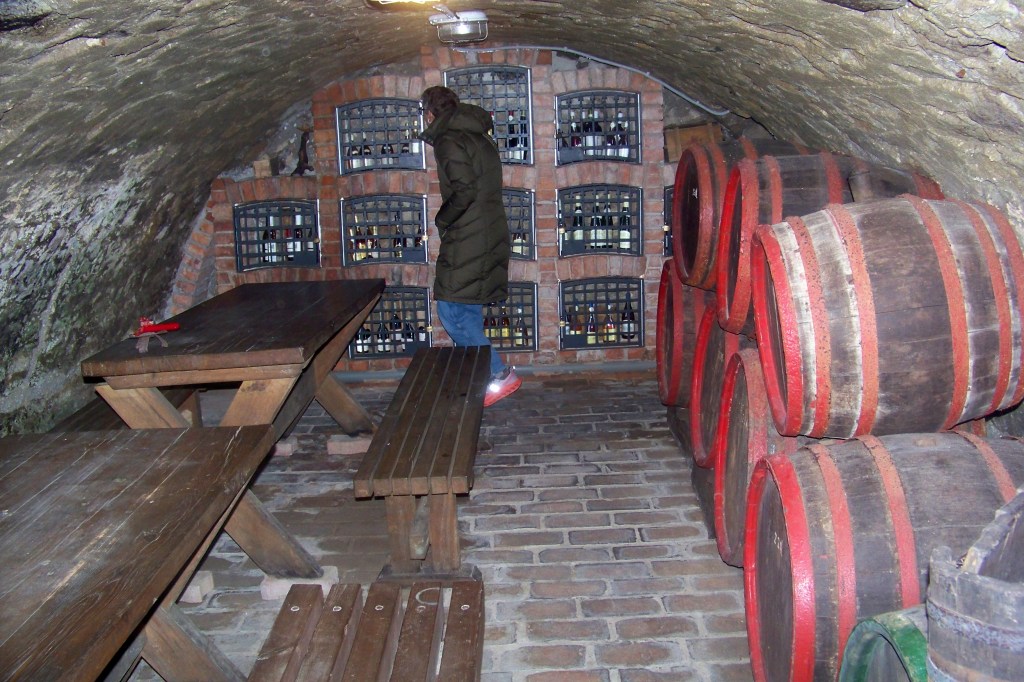
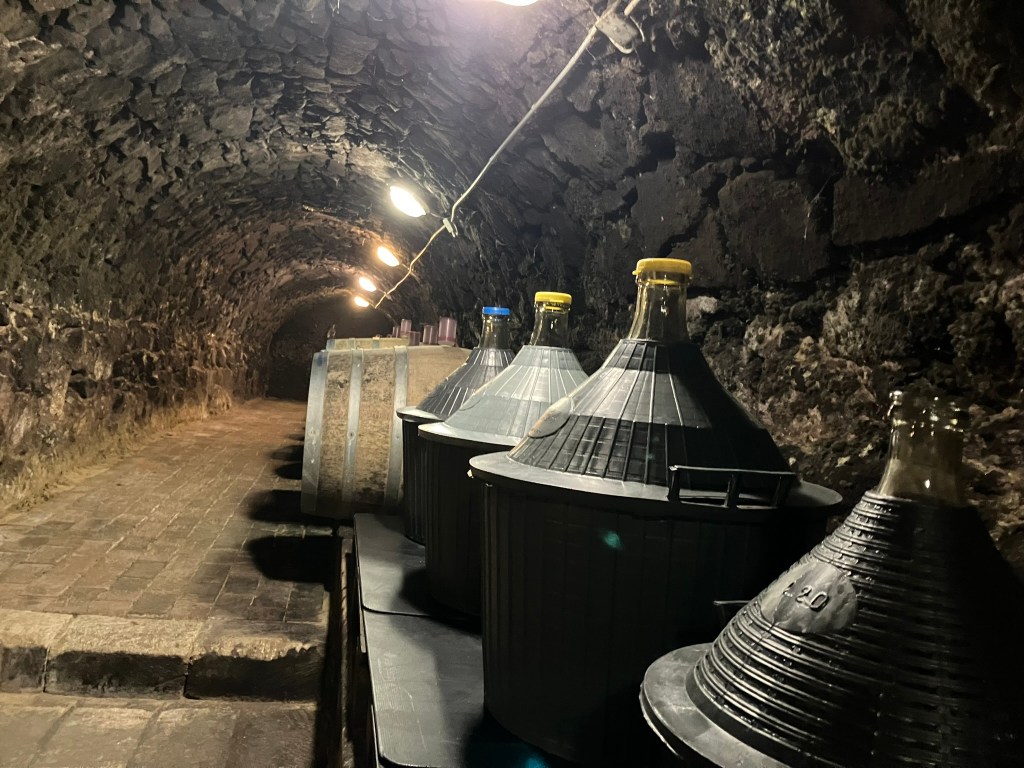
Tokaj has a number of wineries with their own cellars right in town.
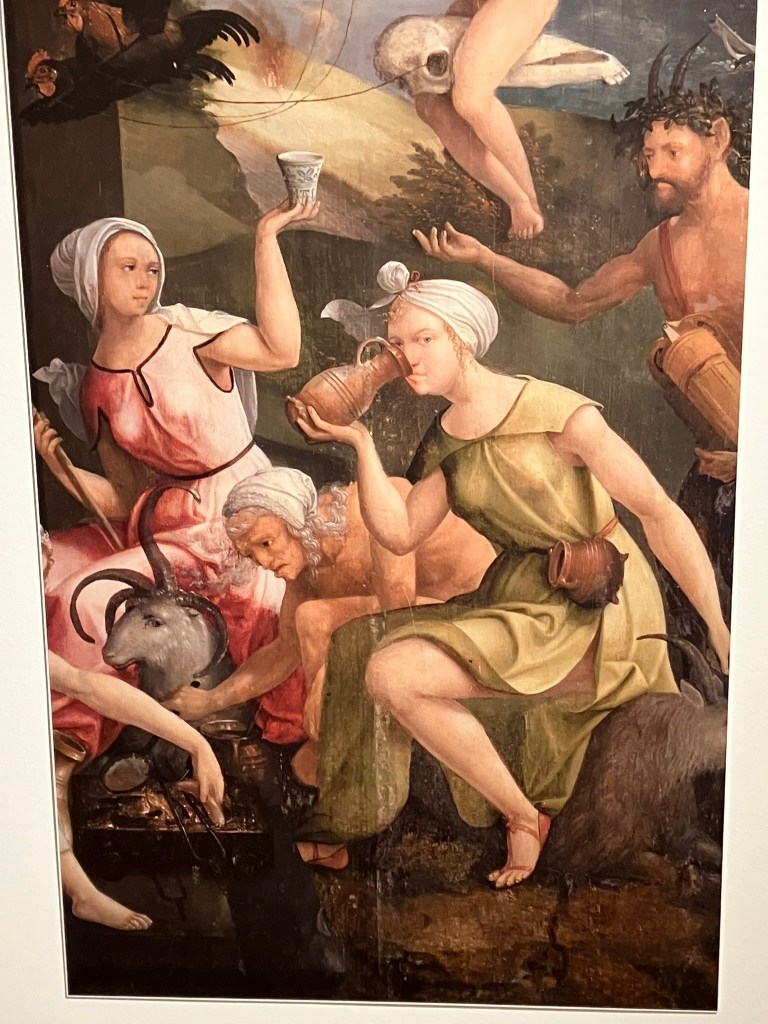
From the Tokaj Wine Museum
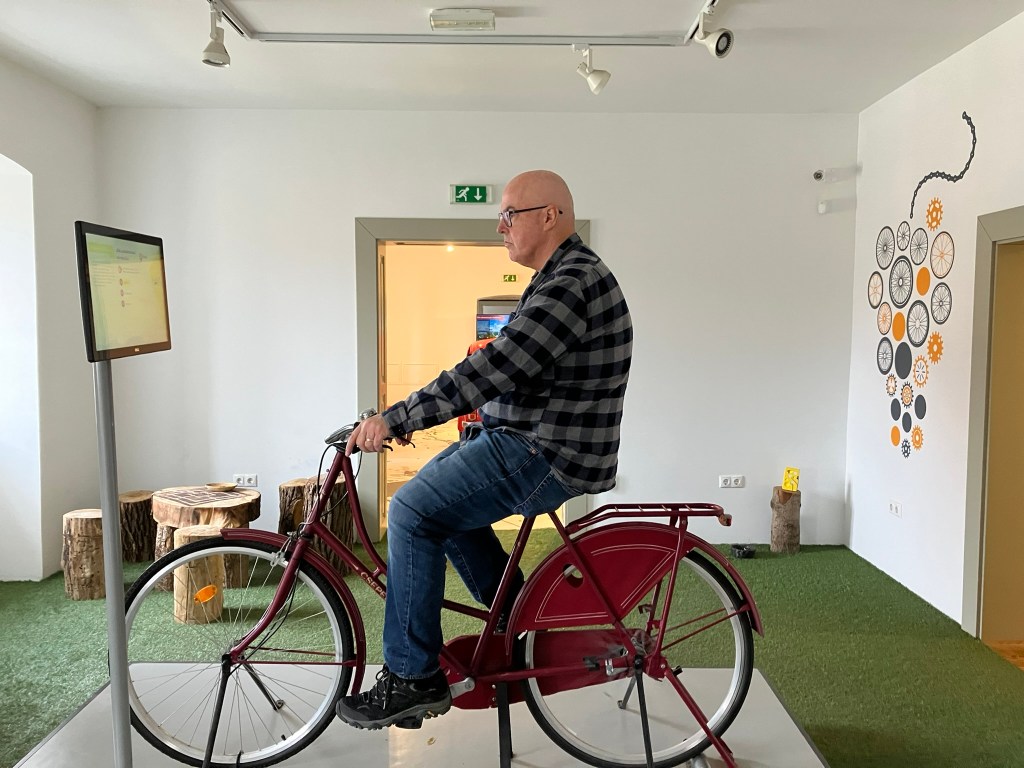
Too cold to ride outside, so this virtual bike tour through Tokaj’s wineries will have to do.
Bükk National Park
Our next stop was the town of Szilvásvárad, which is the gateway to the National Park in the northern reaches of Hungary, near the border with Slovakia. Bükk is clearly a summer destination–a lot of the tourist attractions (such as the narrow gauge railroad and the stadium where the local Lippazener horses perform) were mothballed until Spring. We were literally the only people staying at the little inn we stayed at–it was a self-check in place. This led us to make many Shining jokes for the two days we spent there.
For us, this meant a very quiet and somewhat solitary visit in the town and the park. We spent most of our time there walking along quiet trails, and visiting the park museum where we were the only visitors. On our second morning we were greeted with a fresh dusting of snow.
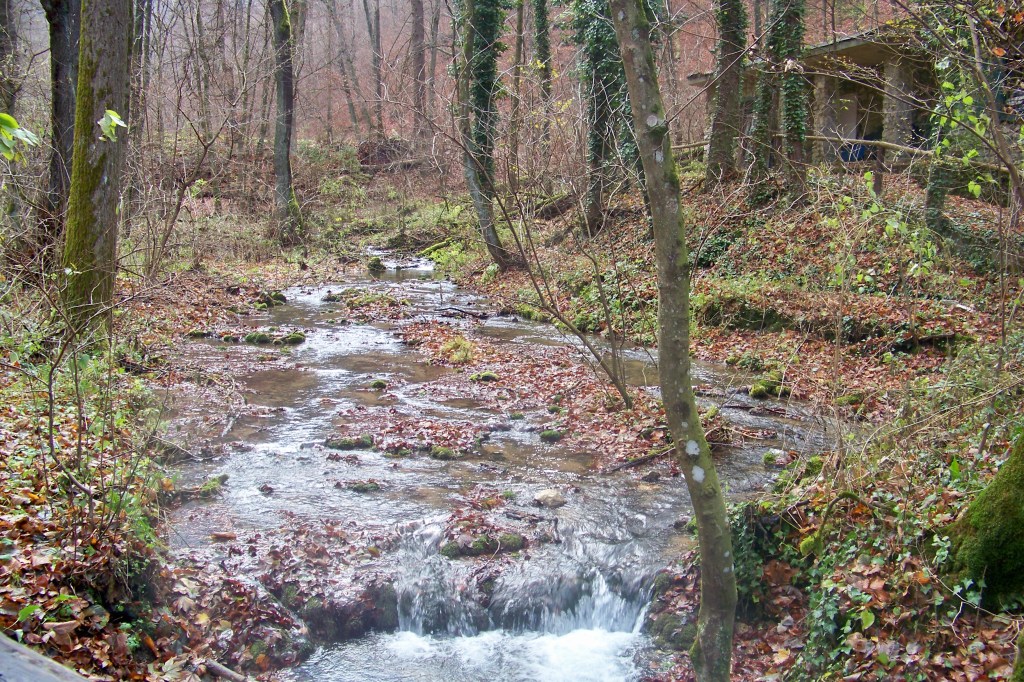
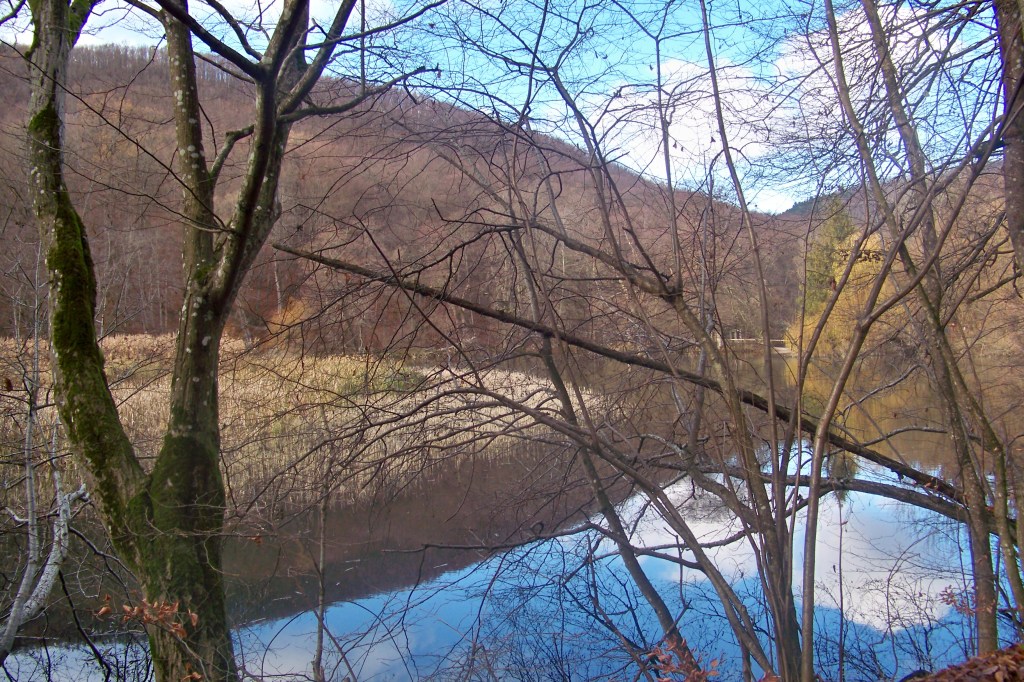
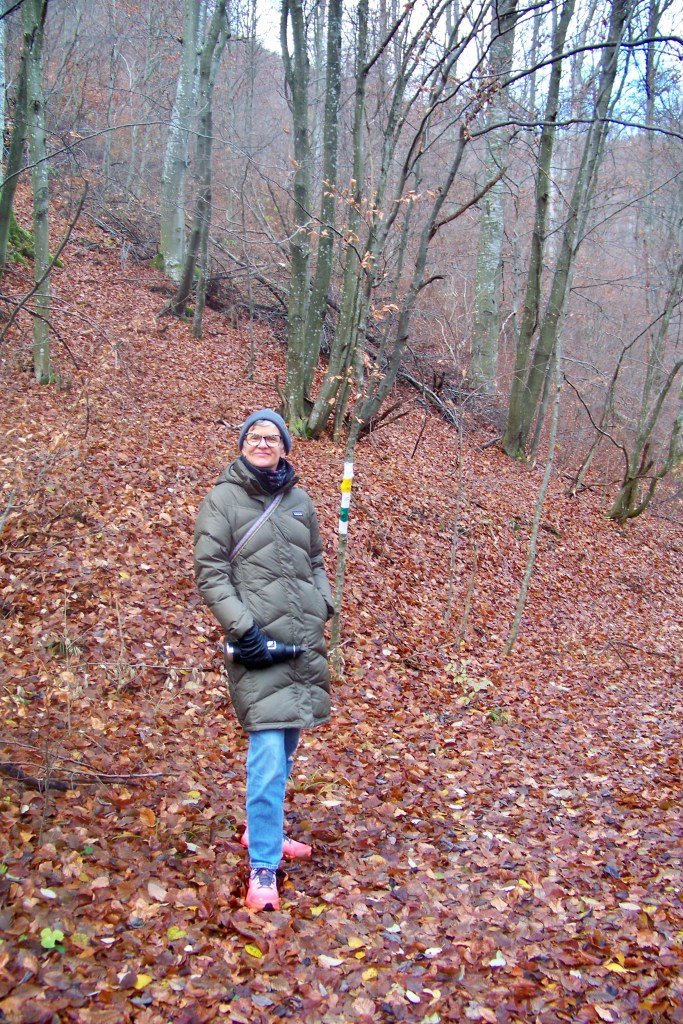
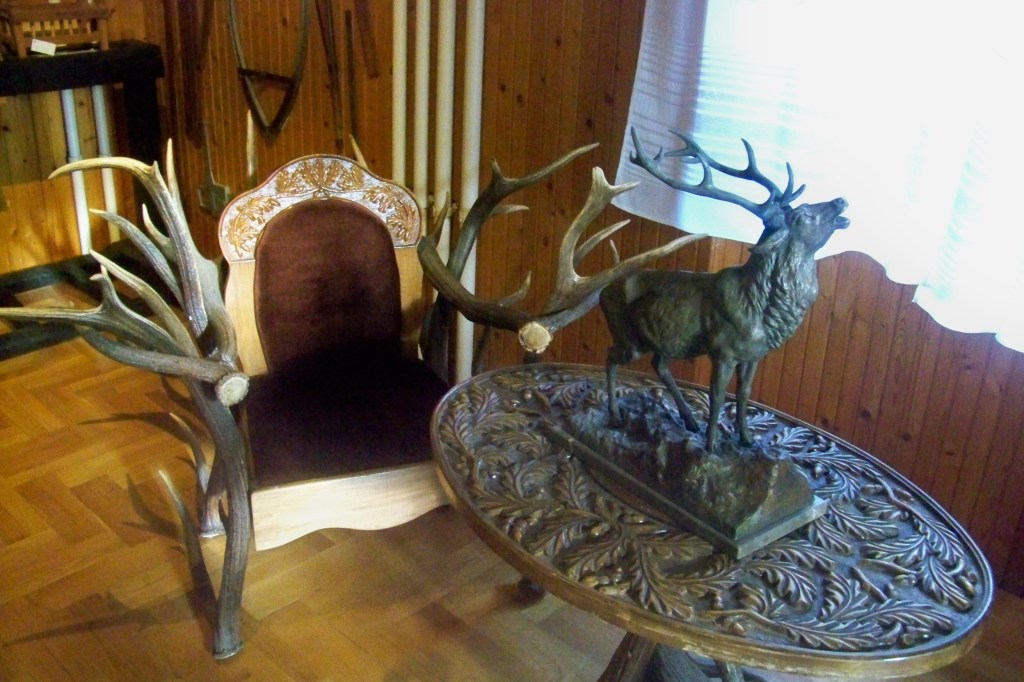
Antler chair at the museum. Sit at your own risk.
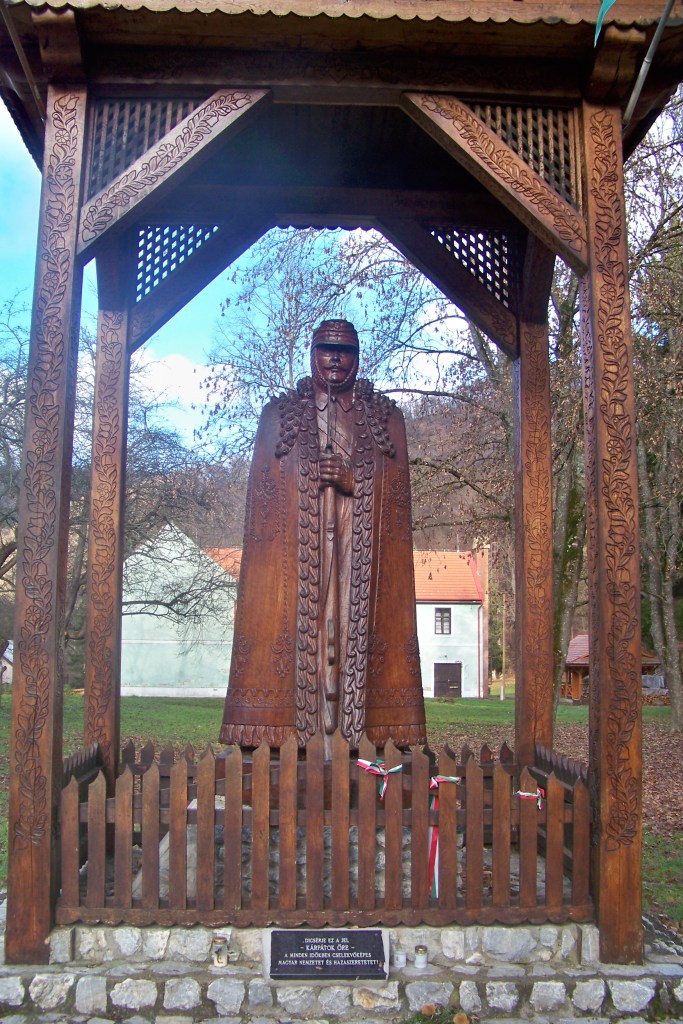
This wooden statue has quite a story. It commemorates the alert military system that guarded the mountain passes of the Carpathian Mountains. It was originally located in a part of Romania that was once part of Hungary, but this became territory that the allied powers took away from Hungary and gave to Romania after WWI. Subsequently, the statue was burned down by the Romanians. Later, a copy was made, which now stands in Bükk.
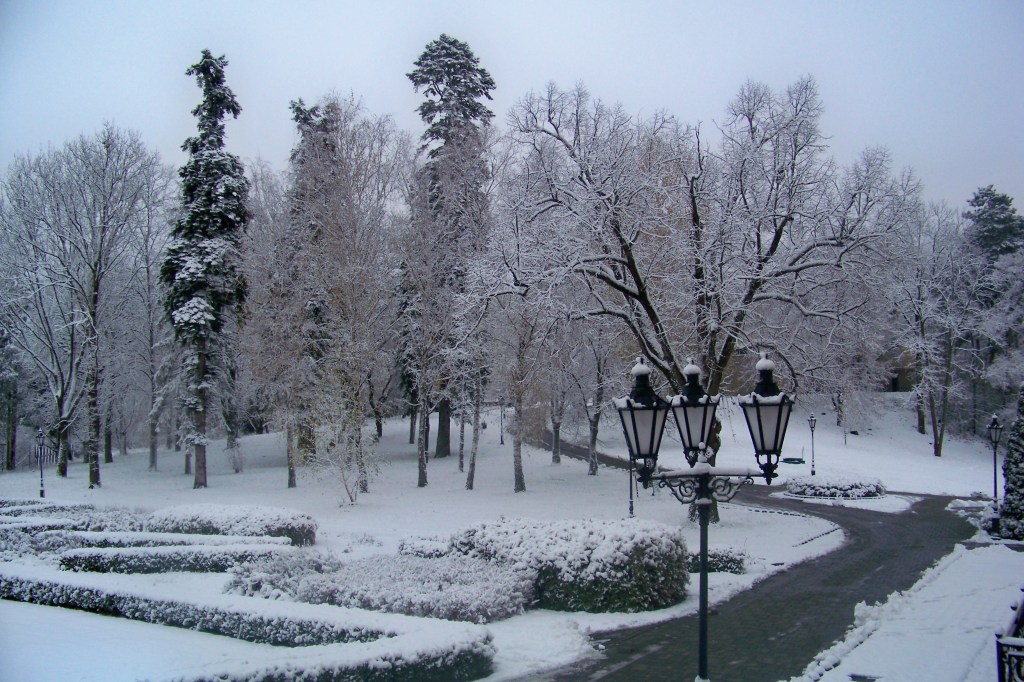
Fresh snow!
Eger
Our next stop (after riding an ancient diesel mini-train through the Bükk mountains) was Eger, a city just to the south of Bükk. Eger is a mid-sized city which is known for its huge castle-on-the-hill, its wine (red this time), and its Beatles Museum.
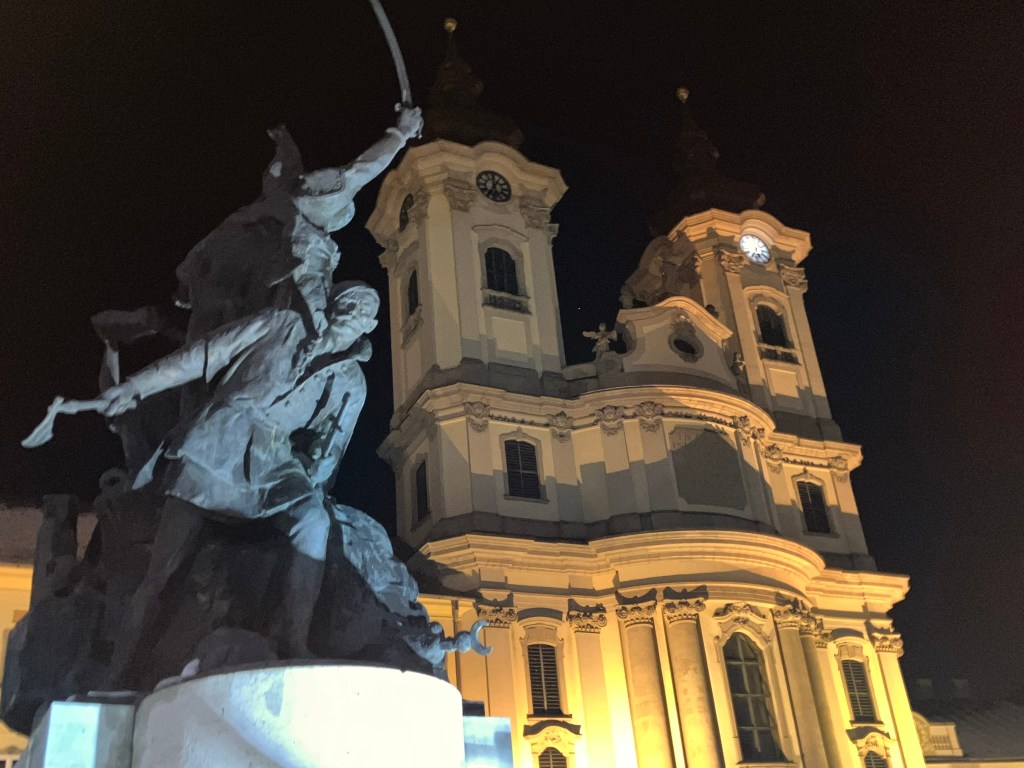
Eger’s main city square.
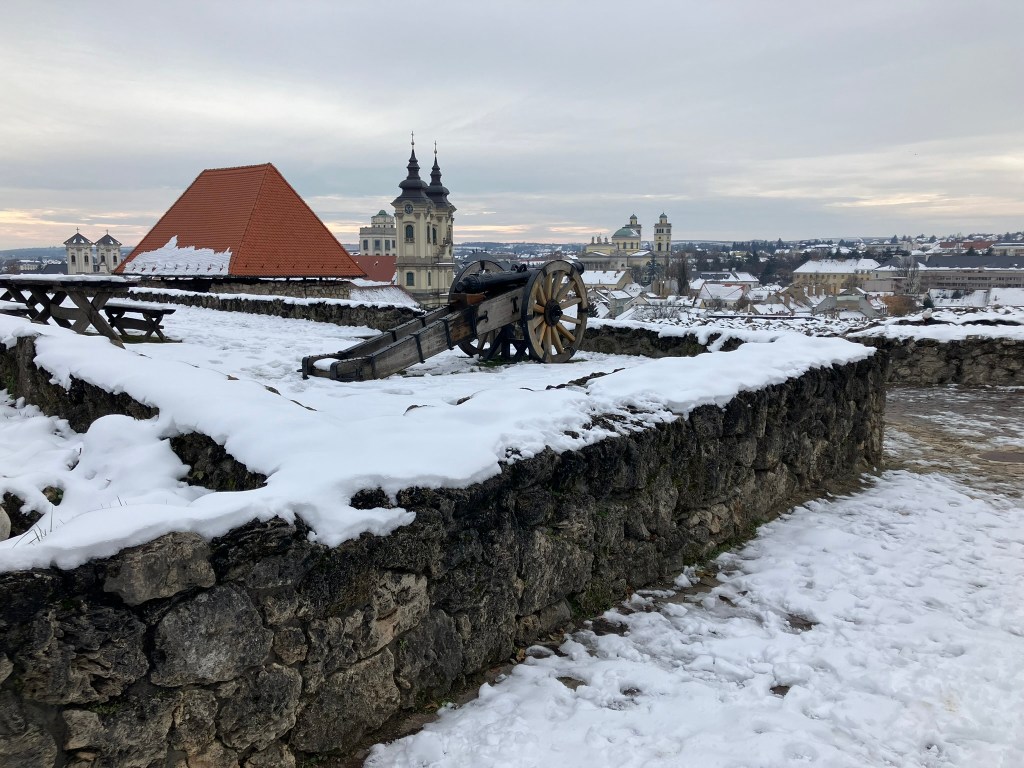
The view from Eger Castle. This huge castle lords over the city, which spreads out from all sides of the castle. A famous battle took place there in the 1500s where the locals managed to repel the Ottomans. This ended up being only a temporary victory, however, as ultimately the Ottomans took over the entire region.
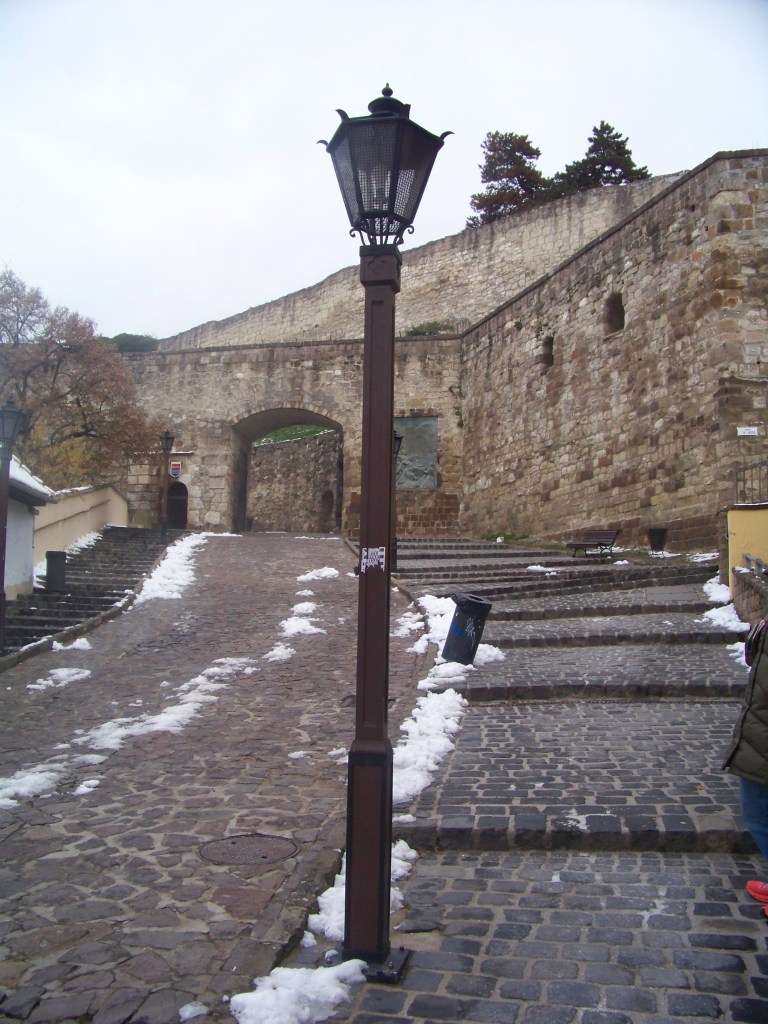
The steps to the castle gate
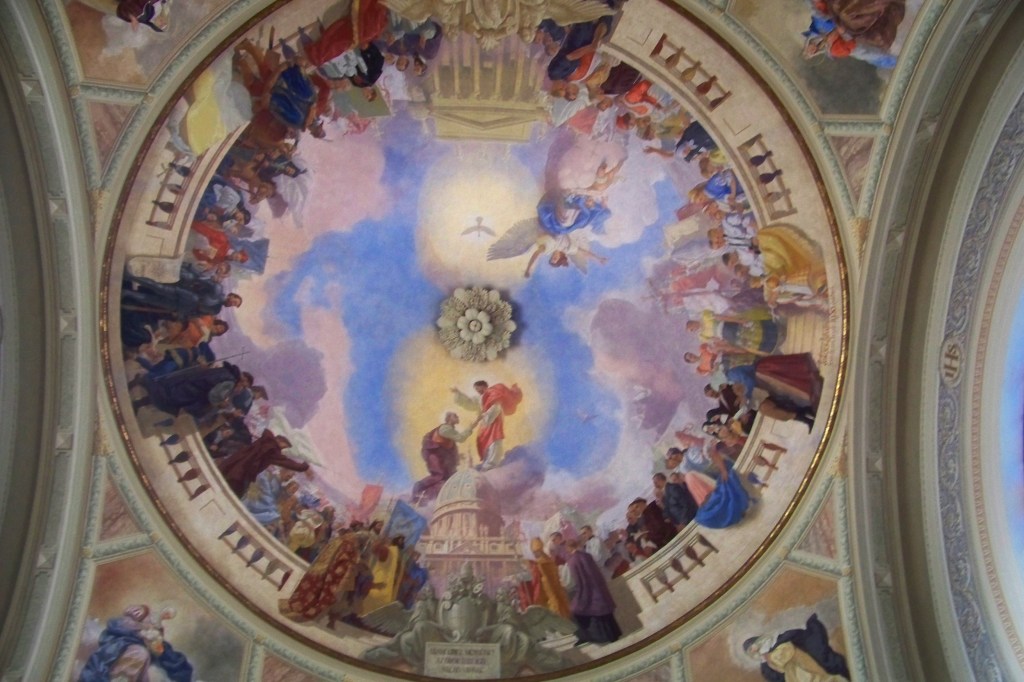
Fresco at the Cathedral of St. John the Apostle.
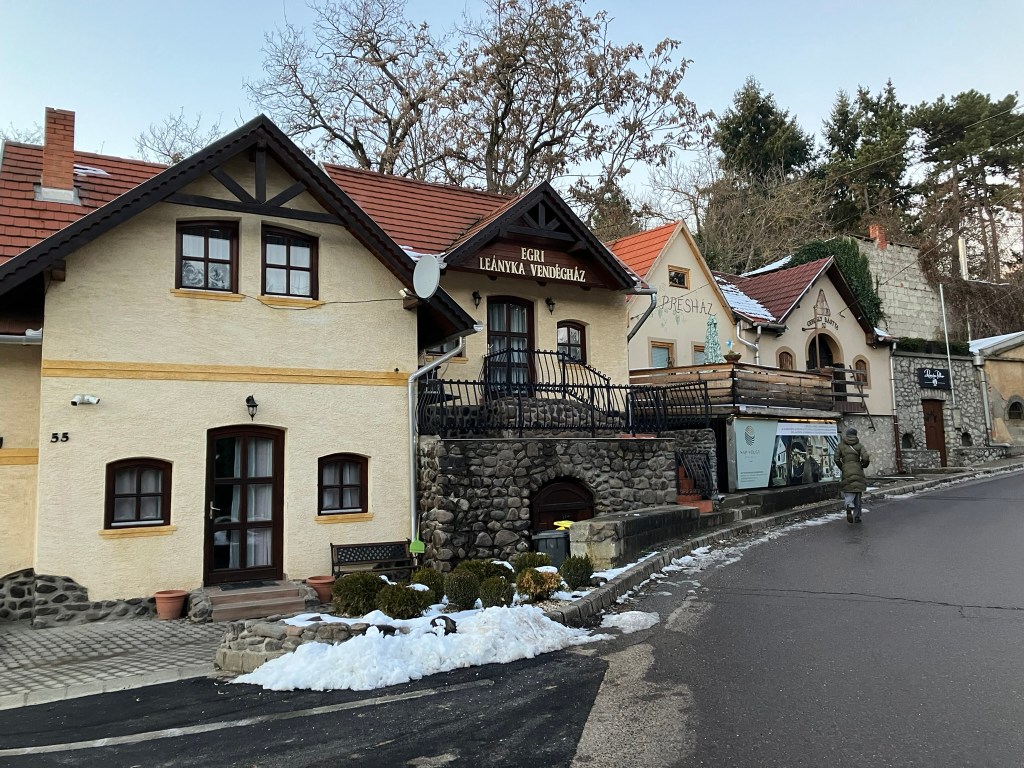
The epicenter of Eger’s wine industry is the “Valley of the Beautiful Woman,” which is an area that comprises hundreds of wine cellars, a good number of which are open to the public for tastings.
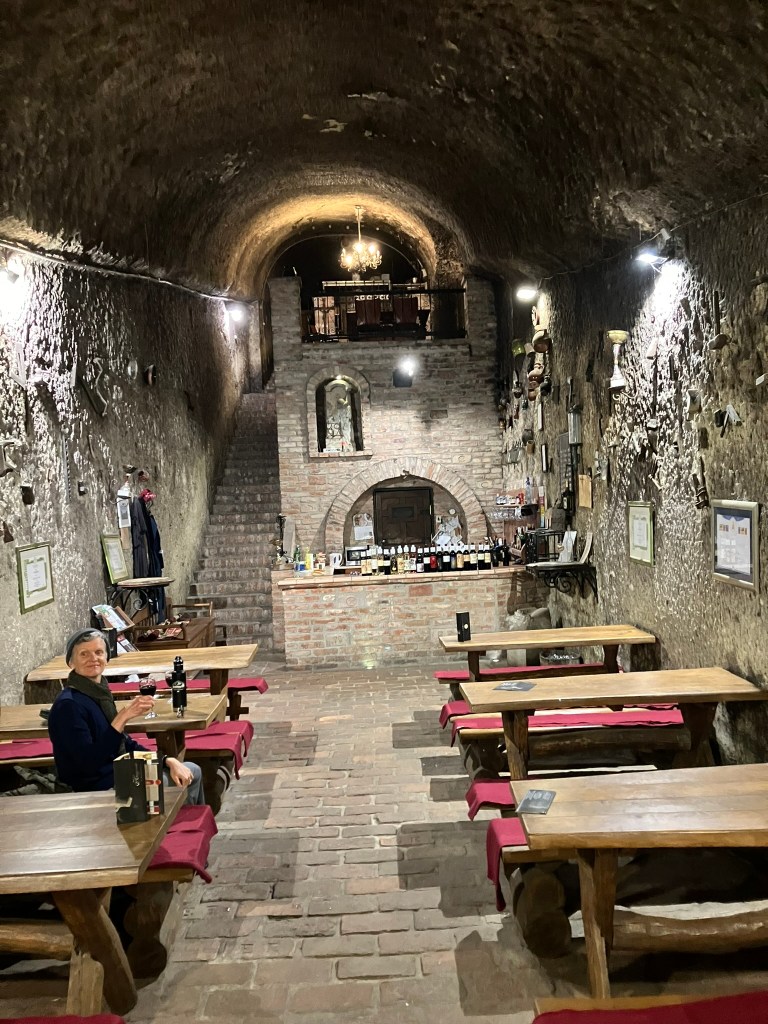
One of the wine caves we visited. Krista is sampling a deep red blend, Egri Bikavér “bull’s blood”, that Eger is famous for.
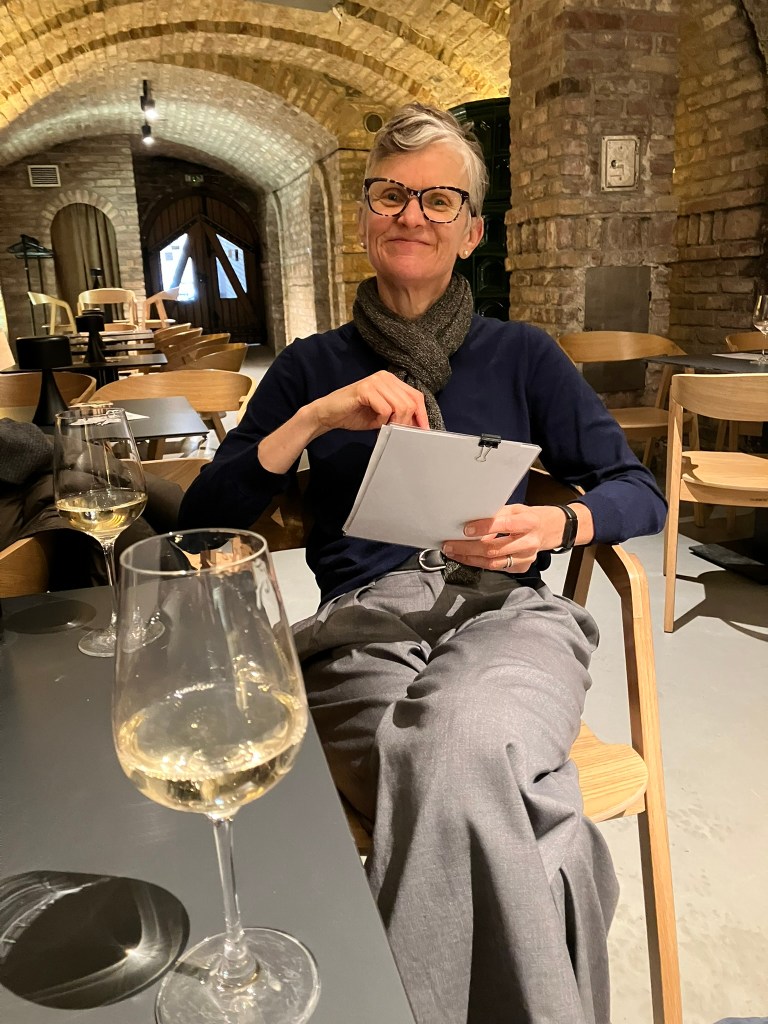
Krista looking like she belongs on the cover of Wine Spectator.
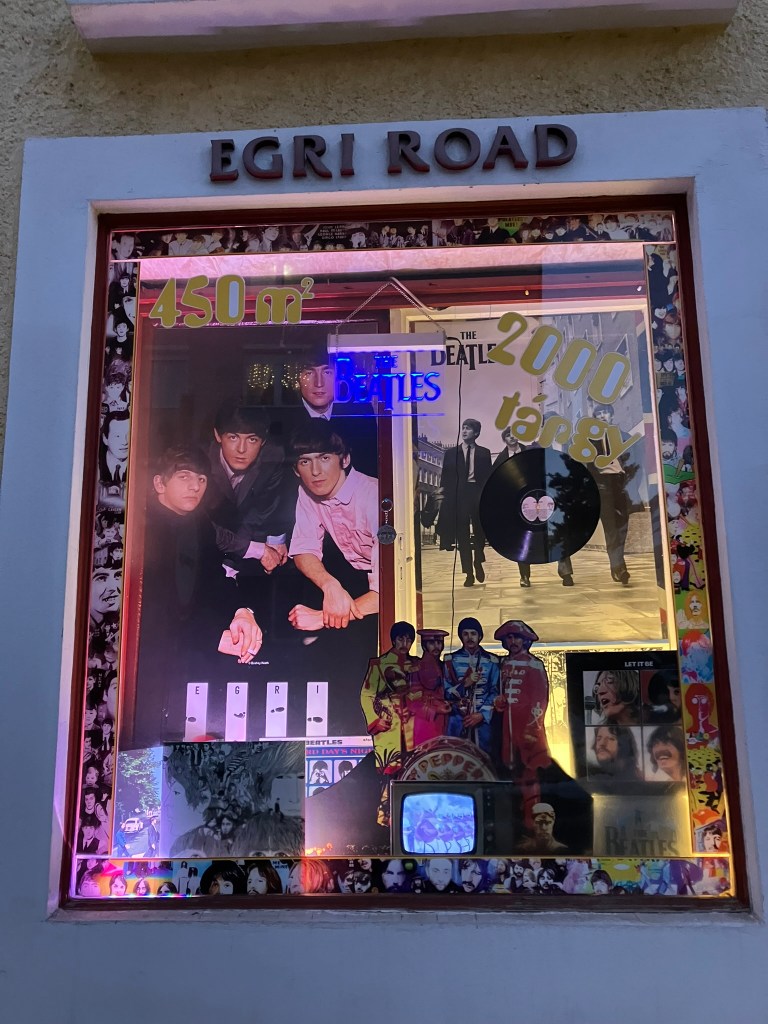
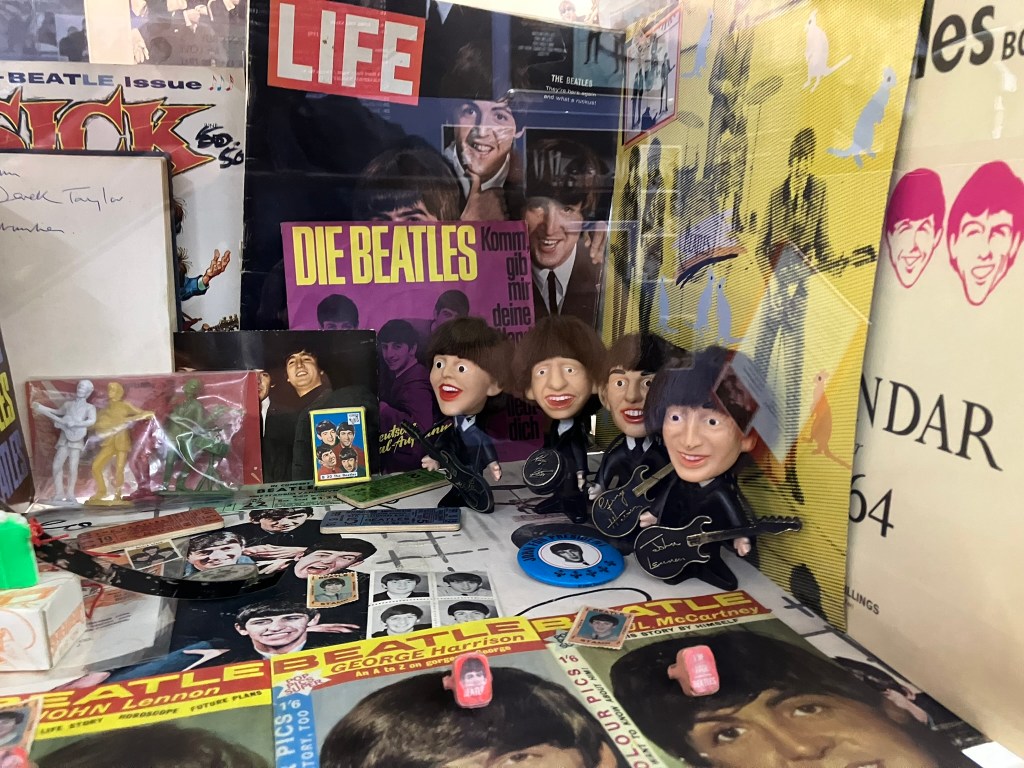
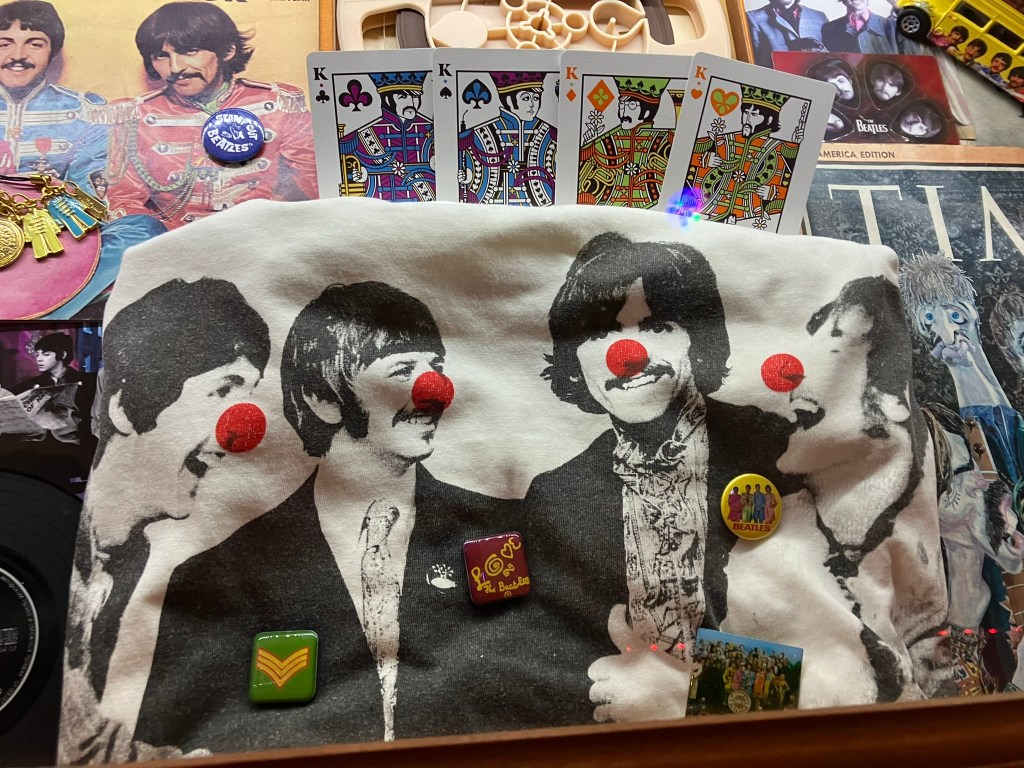
The front window of the Beatles Museum, which is called Egri Road. This was started by two very dedicated local Beatles fans. It follows a timeline of the Beatles’ career, and has two floors packed with memorabilia, swag, figurines, videos, records, and other stuff. Information panels tell the story of the band in vivid detail. A total dream for a Beatles fan. I even learned a few new things.
Budapest
Finally we get to our last stop, the capital city of Budapest. Until this point in the trip, we had encountered very few English speakers, and no Americans. That all changed here, as the city was teeming with tour groups, ex-pats, and just wandering lone tourists like us. Many were from the U.K. or the U.S. Even in late November, and during Thanksgiving week. This city was actually two cities at one point–the hilly Buda and the flat Pest. They merged into one in 1873, and now it’s just one big, glorious spread of a city of 1.7 million people.
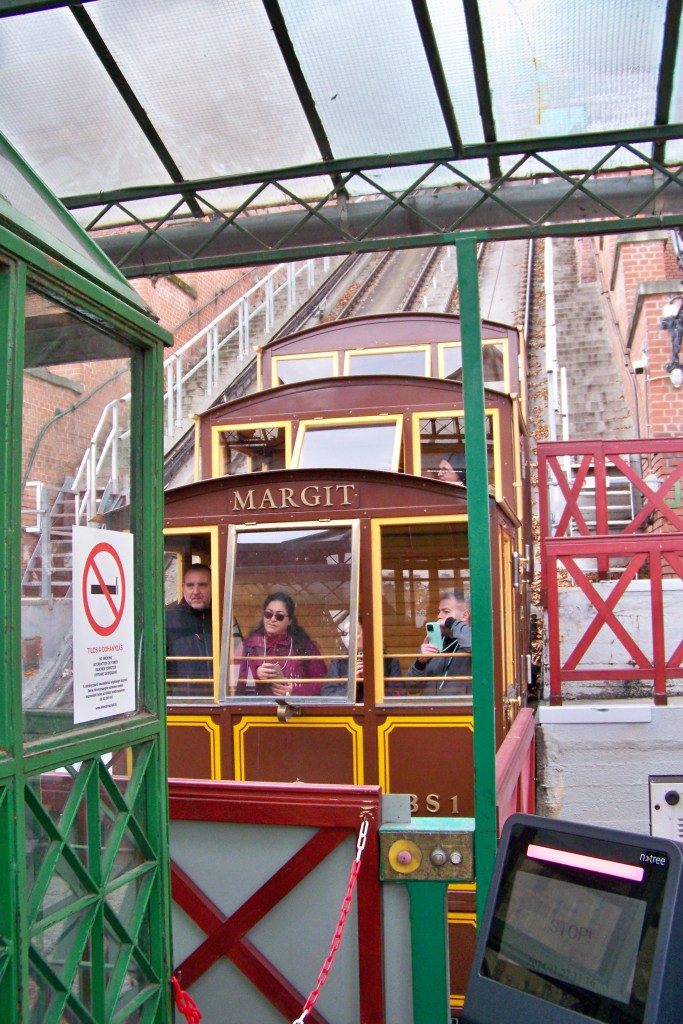
19th century funicular goes from the street to the castle.
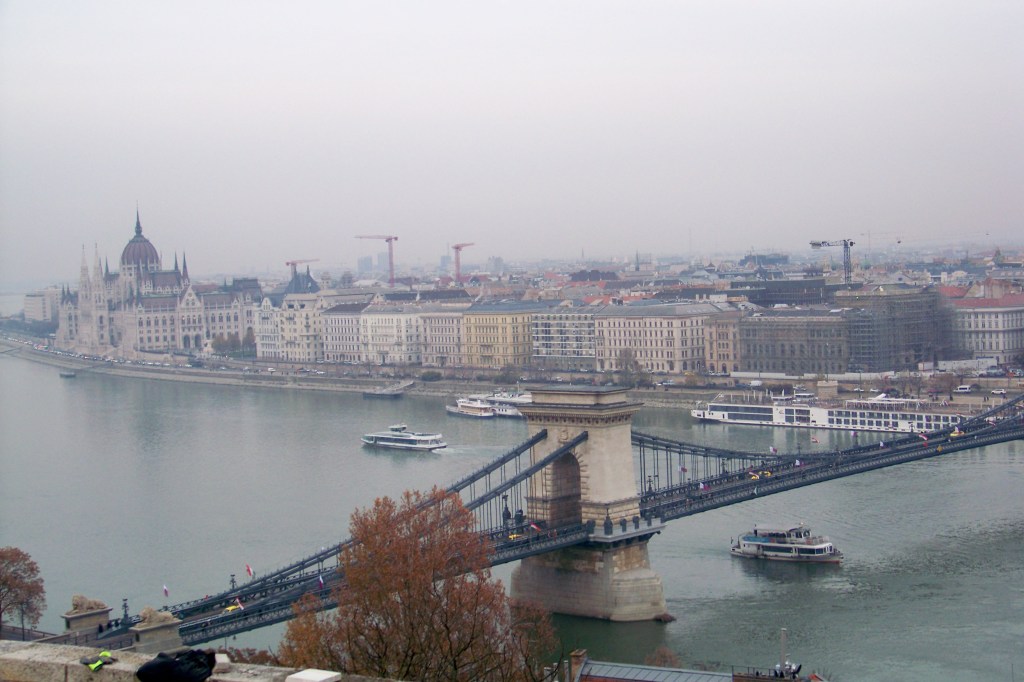
The view from Castle Hill.
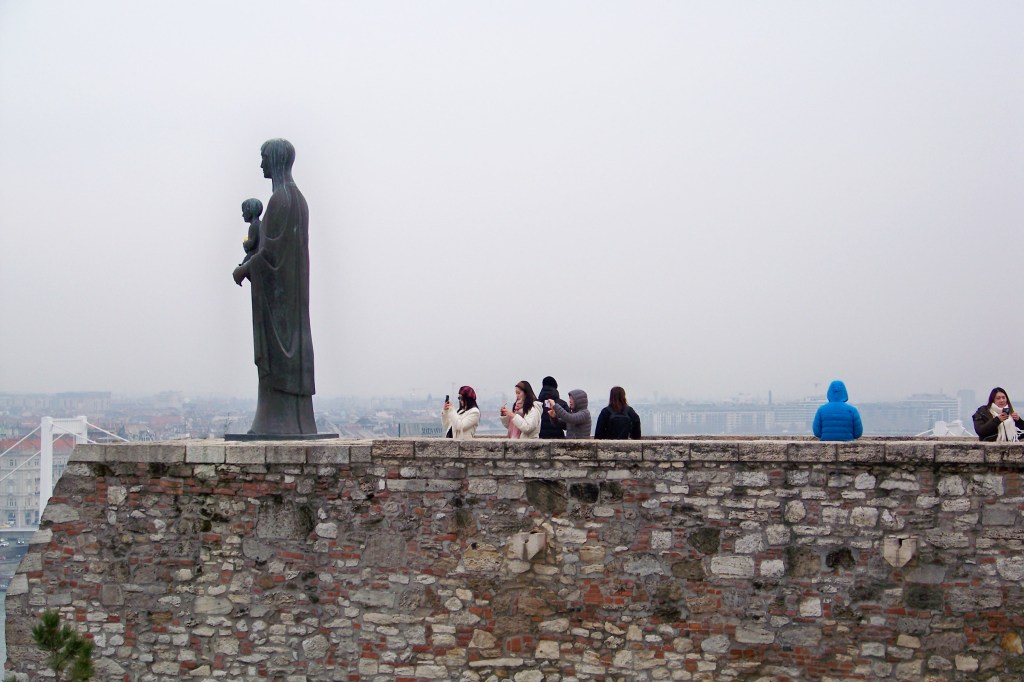
Castle Hill.
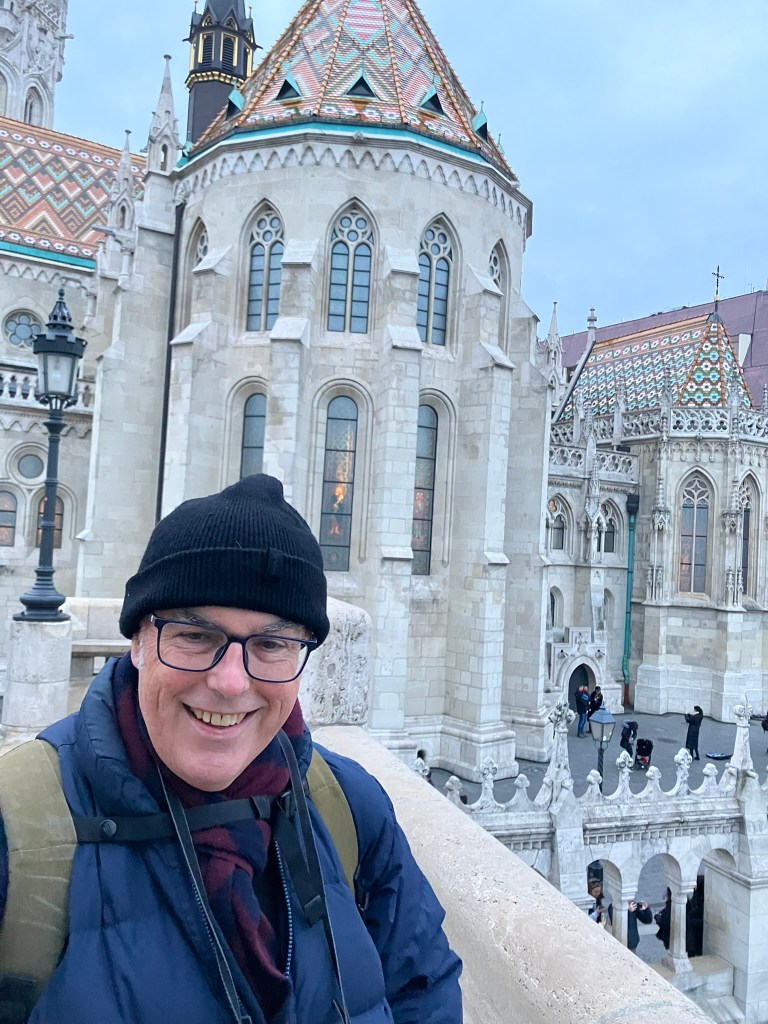
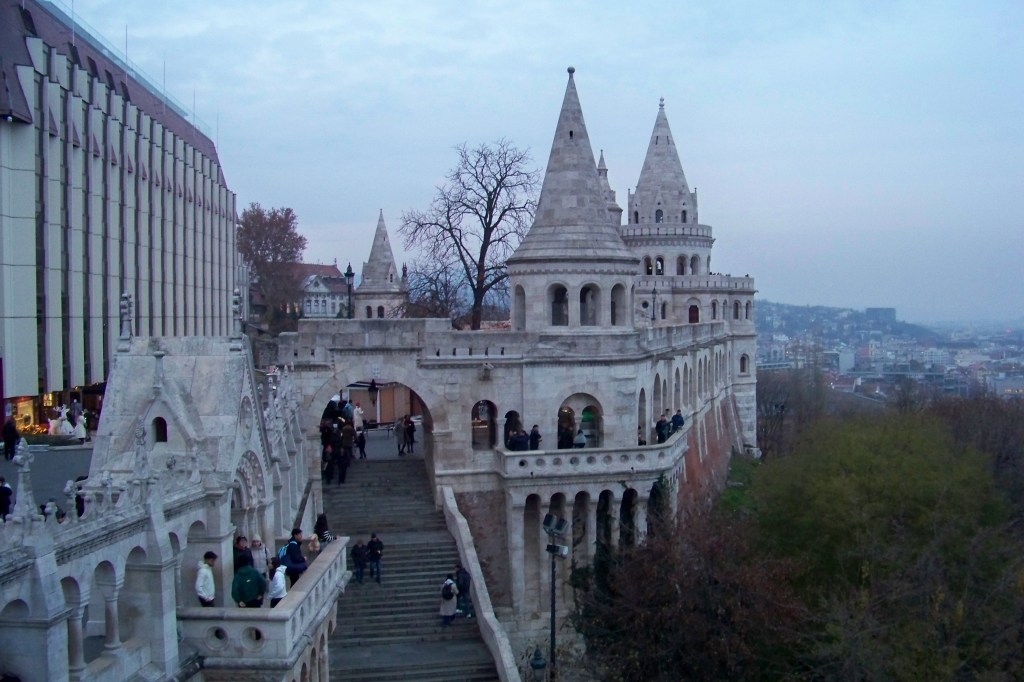
Above: Me photo bombing St. Matthias Church, Castle Hill. A structure that is amazing inside and out. Below: the Fisherman’s Bastion.
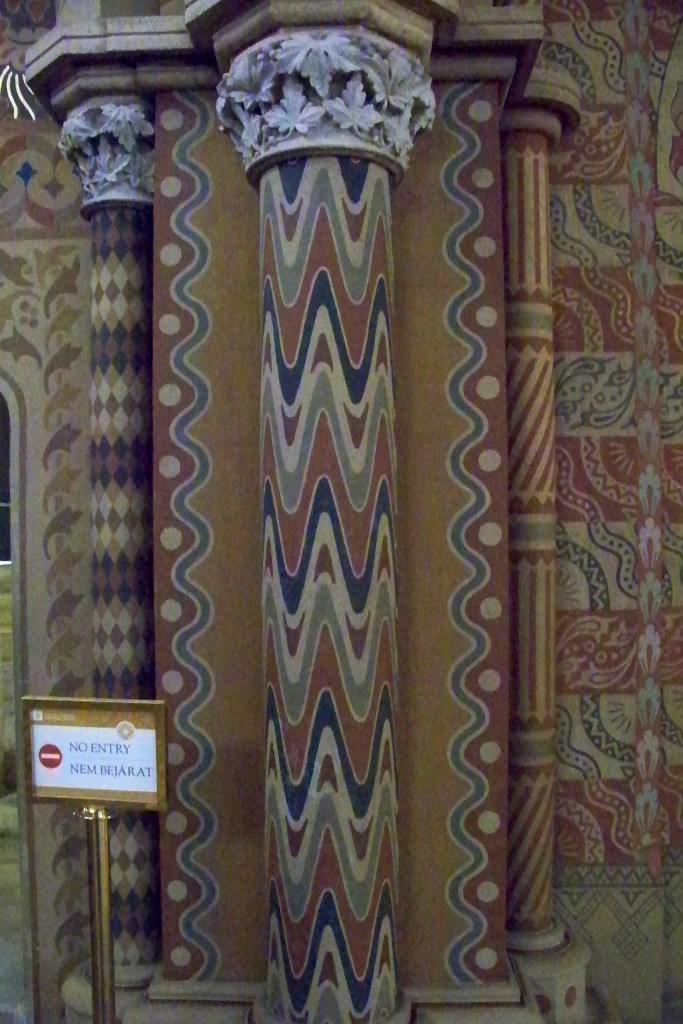
The amazing patterns inside the St. Matthias Church. There must have been hundreds of different patterns.
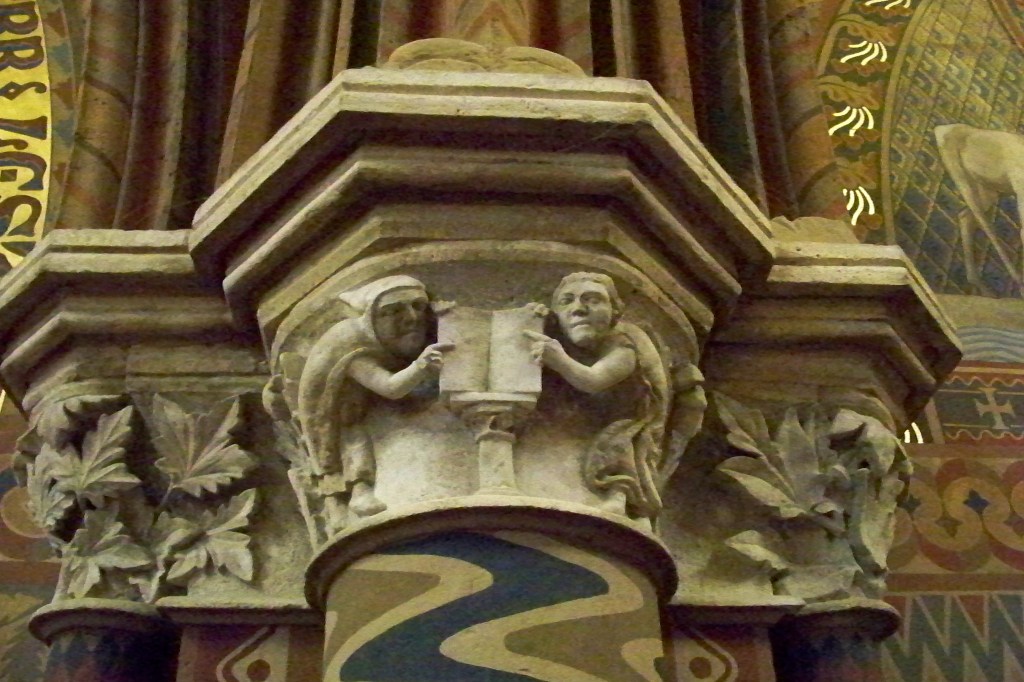
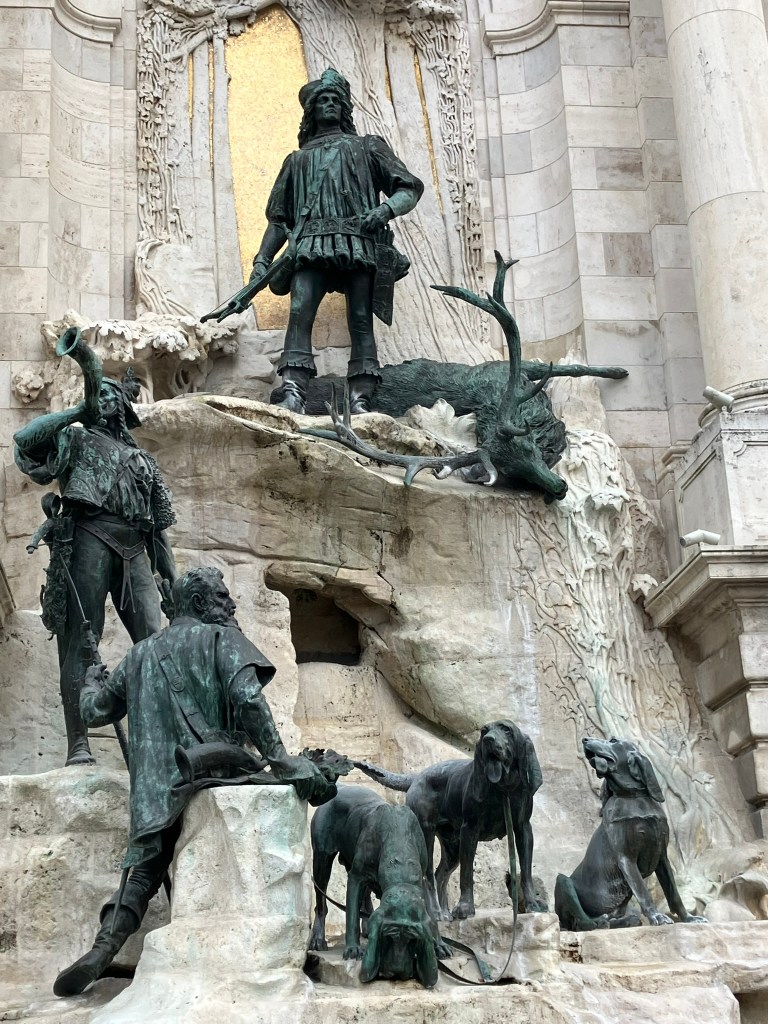
Sculpture at Buda Castle.
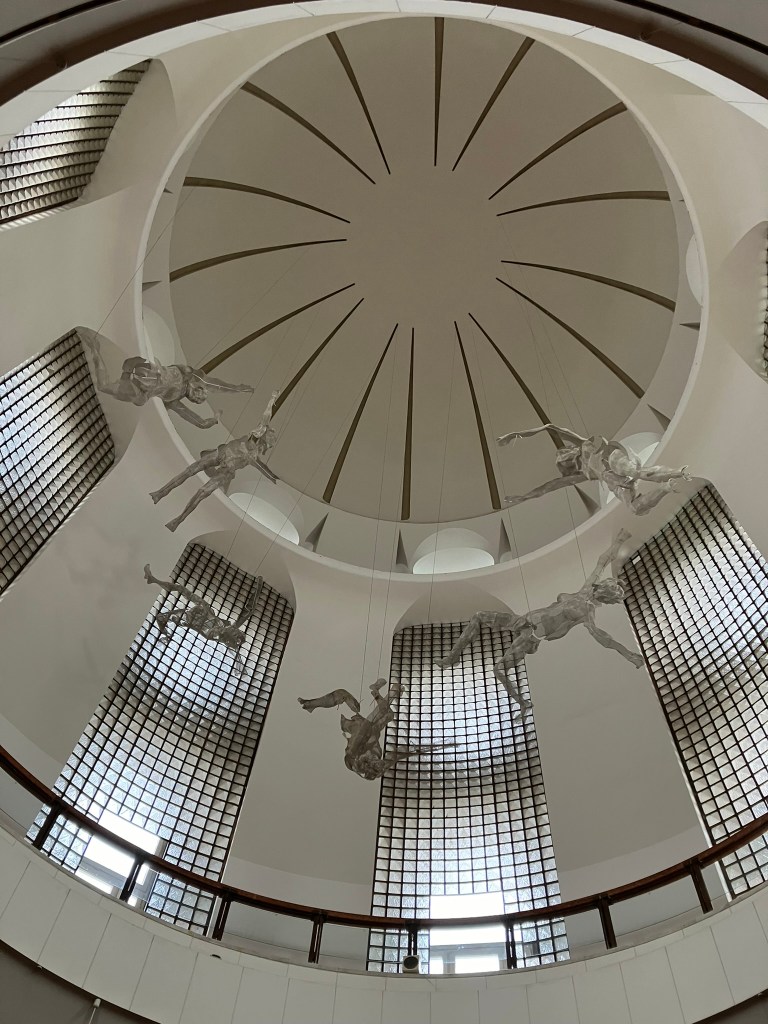
We made it to two big art museums, the National Gallery (mostly Hungarian art) and the Museum of Fine Arts (mostly non-Hungarian, European art). Both were excellent. This is the dome that caps the National Gallery.
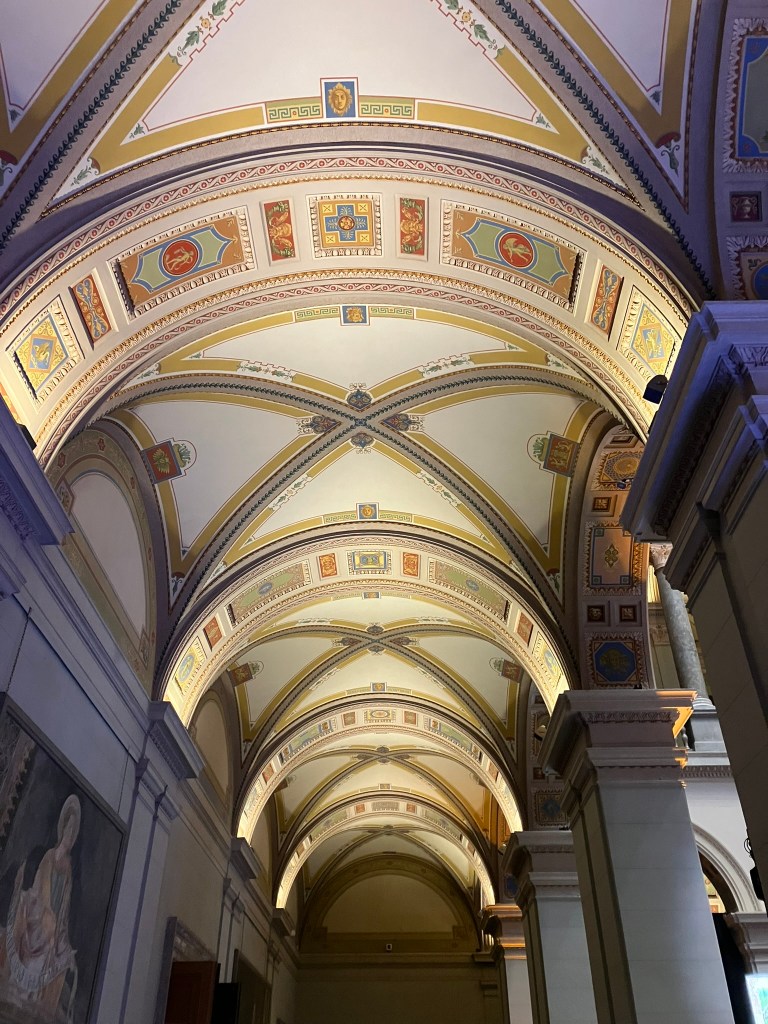
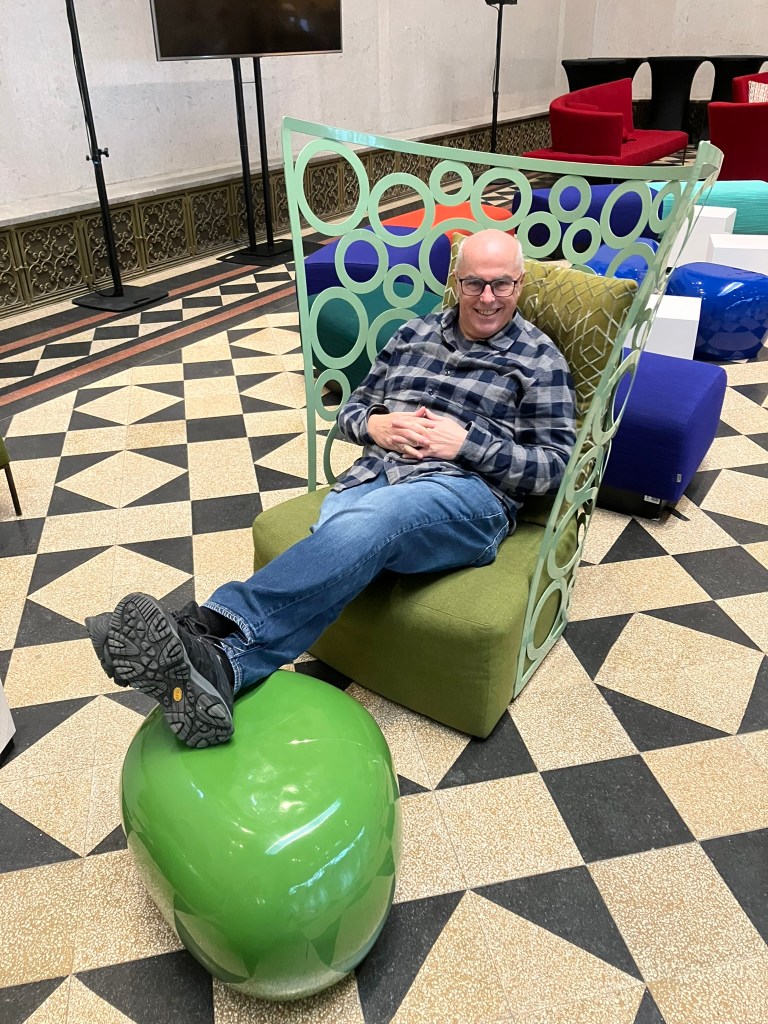
Above: Arches at the Fine Arts Museum. Below: Suess-ian sitting area at the same museum.

We saw an over-the-top production of The Nutcracker at the opulent Opera House (something Rory’s parents never took him to). This very strange sculpture was in front.
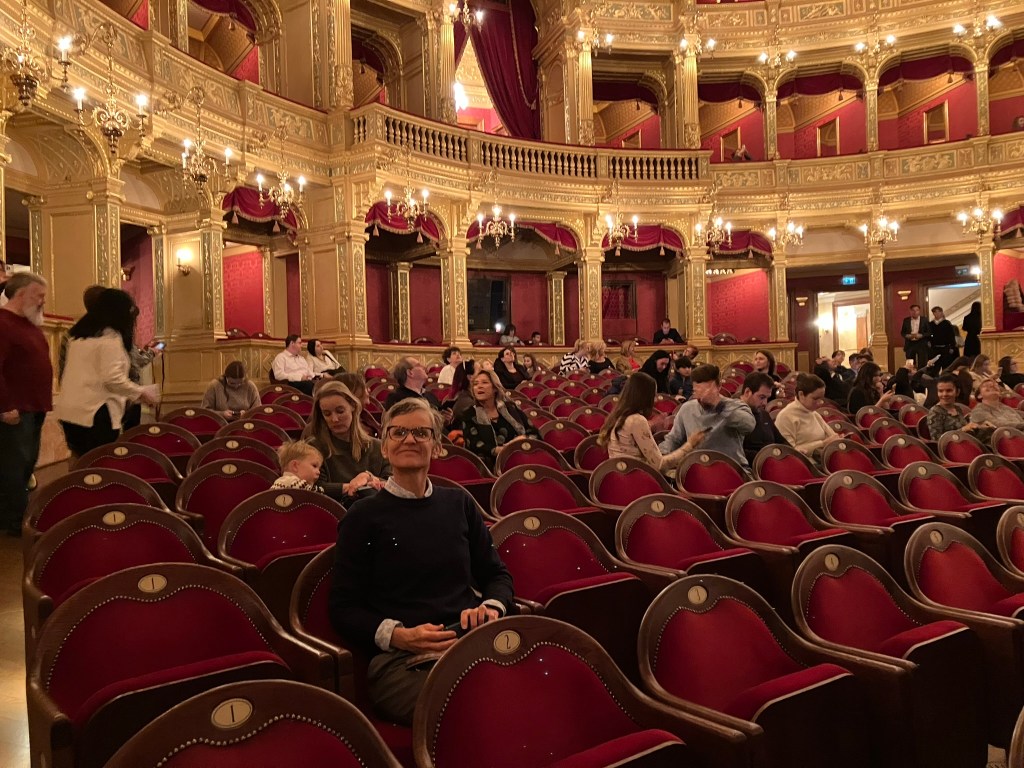
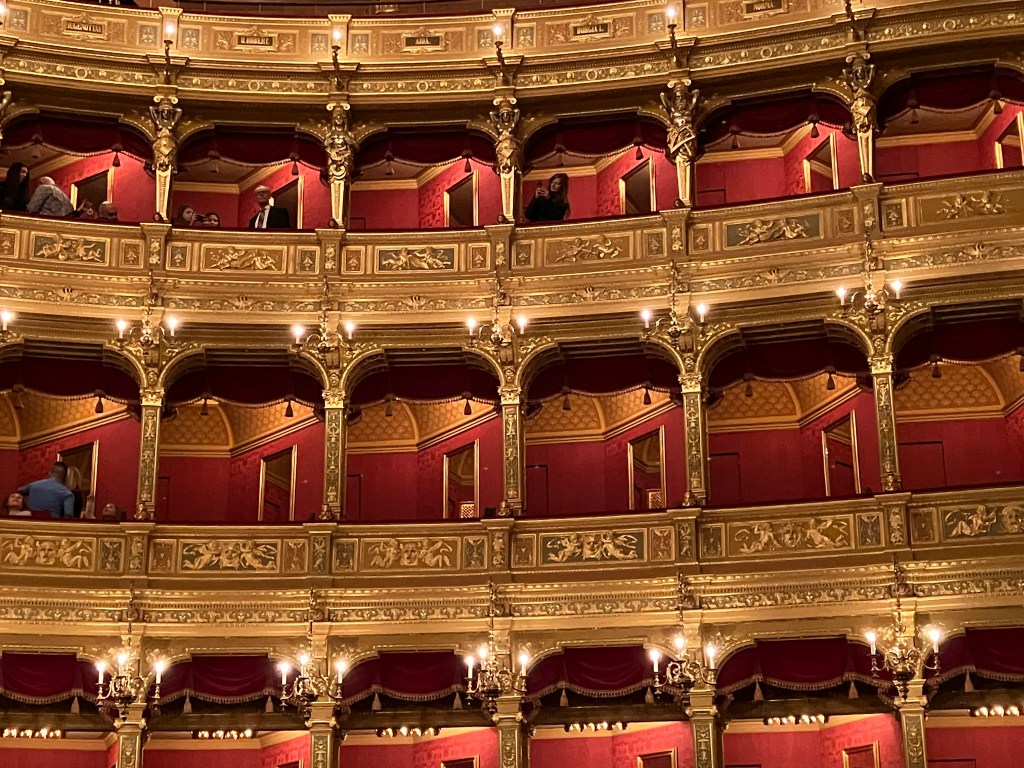
Opera House box seats.

Opera House stairs.
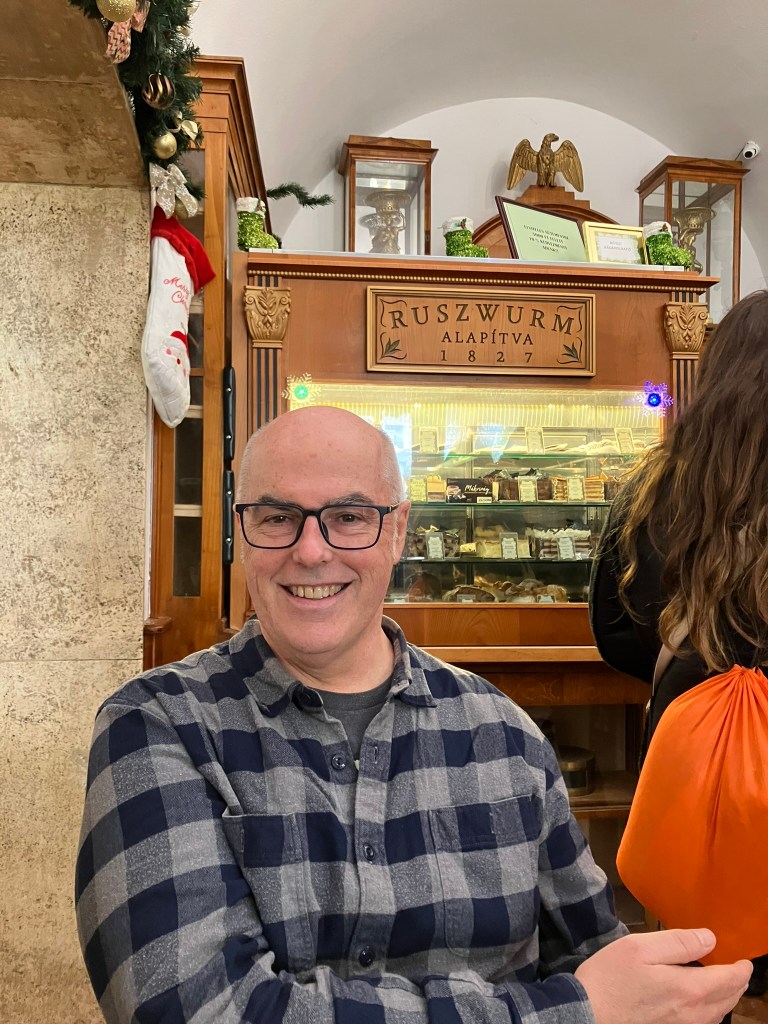
And finally we end our photo tour with Rory (photo above) in front of a 19th Century dessert case at Ruszwurm, a very old pastry cafe. It’s popular but the cakes were worth the wait! That ends this little tour of Hungary! Sziasztok!


 The Js are Silent
Leave a reply to Steve, Denise, and Coco: Calculating Route Cancel reply