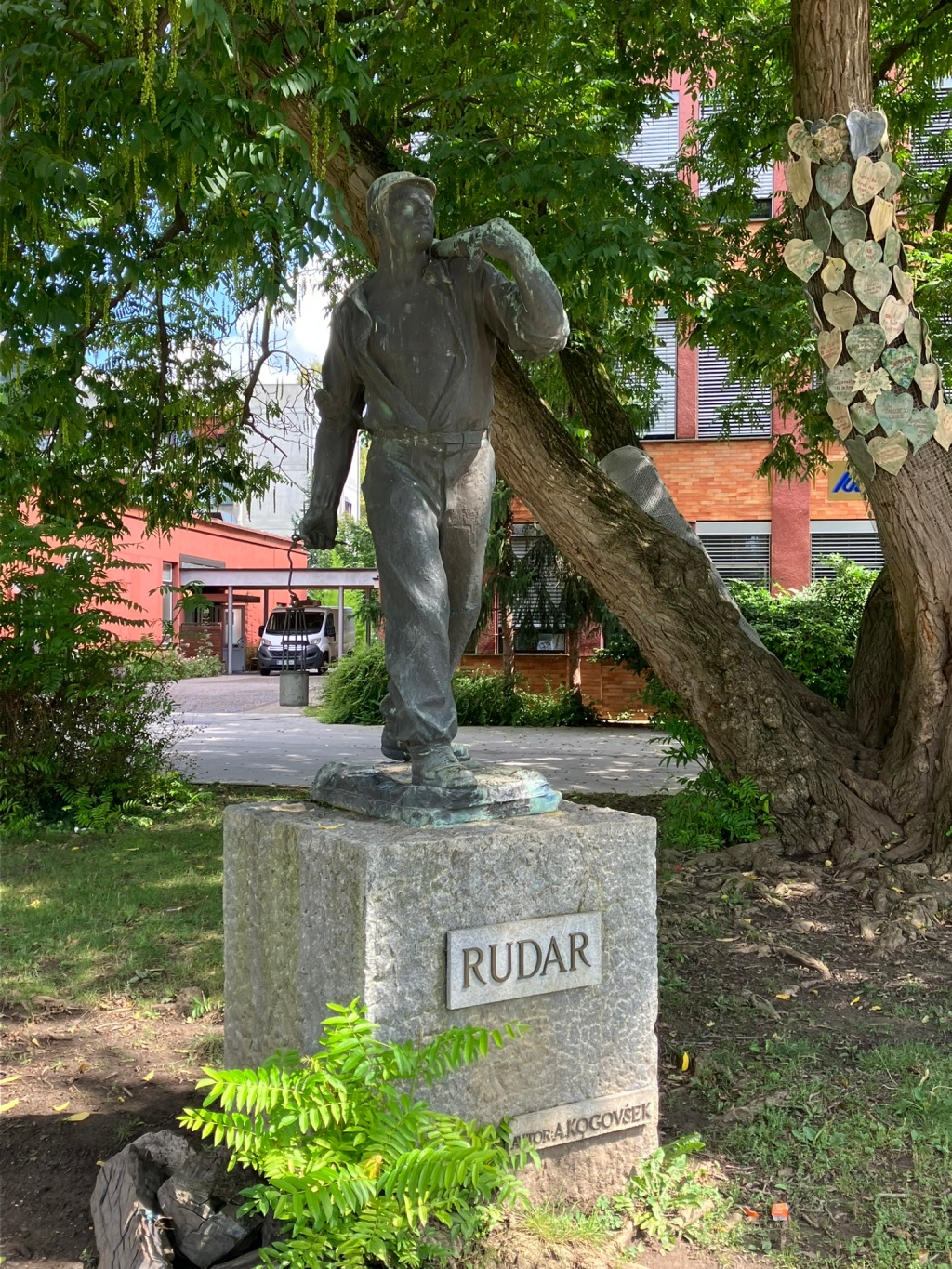
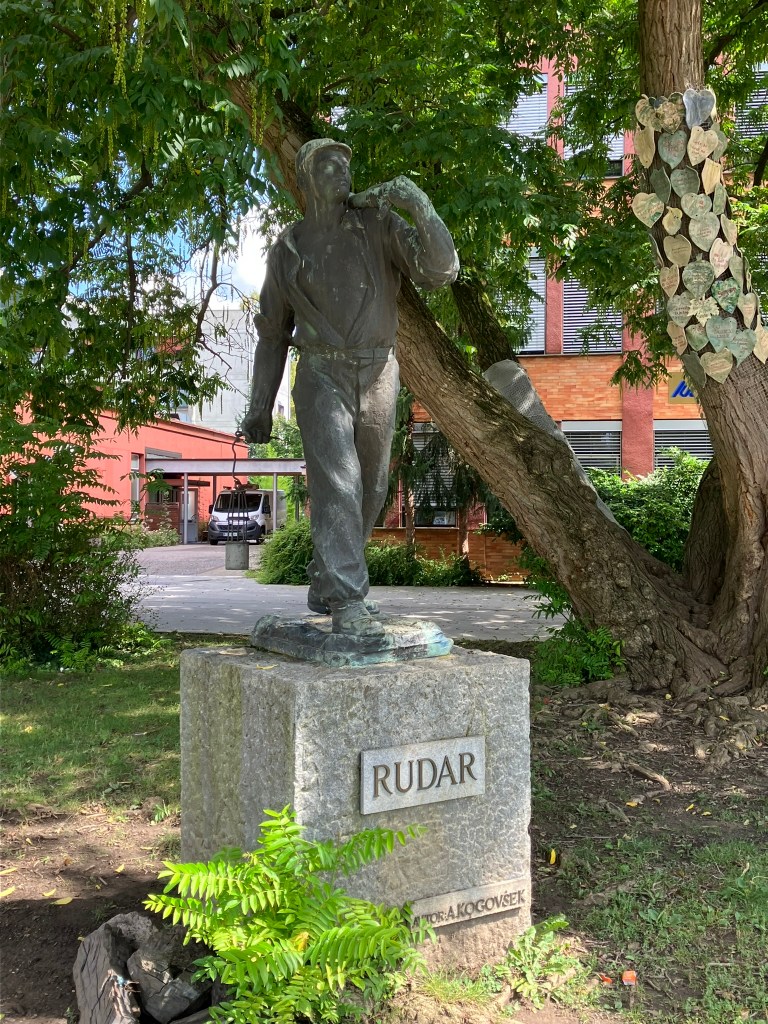
Statue of a miner on Tito Square.
By Rory
I have been doing a lot of exploration of the European clean energy scene as I consider what I will be doing for the next chapter of life. A couple of months ago, I tuned into a webinar that was all about the transition to clean energy in the Balkans. One of the presenters was Karla Sitar, the director of economic development for the City of Velenje. I sent Karla an email expressing interest in meeting, and she invited me to come to Velenje. I didn’t hesitate at the opportunity.
Velenje is a city of 24,000 people in Eastern Slovenia, about 85 km from Ljubljana. The valley it sits in looks like much of Slovenia—green and bucolic. What really stands out, though, is a huge plume that towers over the city, and is visible from miles away. This comes from the coal power plant. The dominant industry (and source of the plume) is a coal complex that does the following things:
- Thermal coal power plant—provides electricity to 1/3 of Slovenia. Replacing the electricity is Slovenia’s (national govt.) problem to solve.
- District heating system – provides space and water heating to the residents and businesses of Velenje. Replacing the heat is Velenje’s problem to solve.
- Coal mine that provides raw materials for #1 and #2.
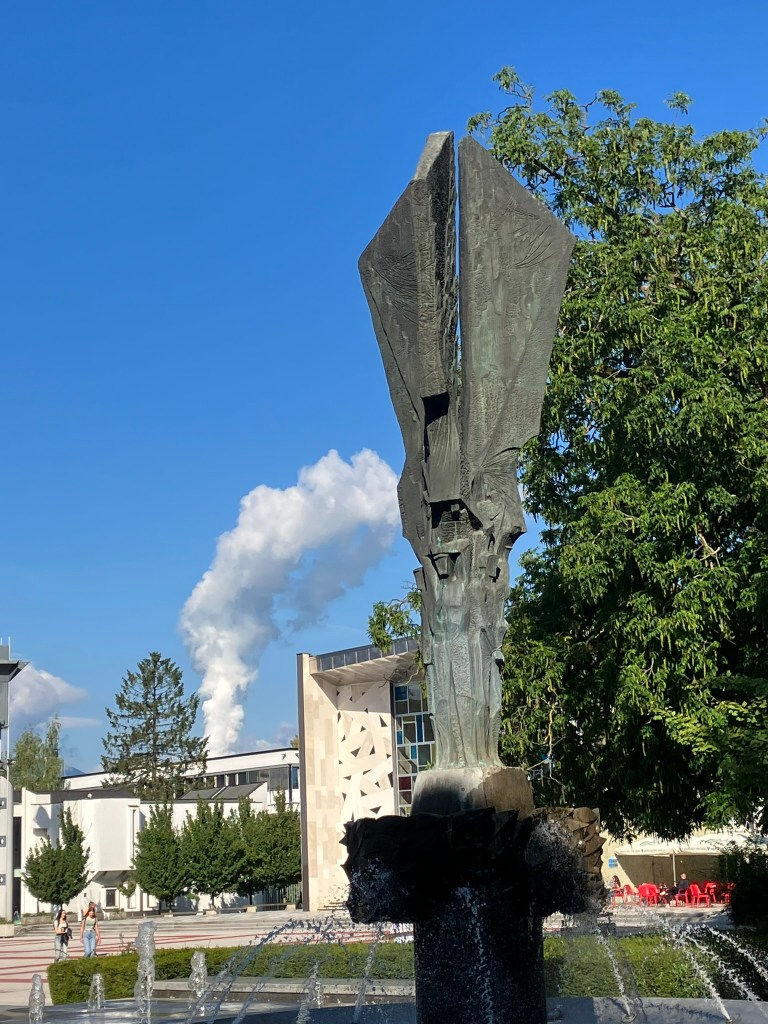
Tito Square. Plume from coal plant looms in the background.
In 2021, the European Union set a goal of being “zero emissions” by 2050, with an interim target of 55 percent by 2030. The way this works is that the EU requires all of its member countries to submit climate plans, and the accumulation of all of the plans must meet the overall EU goal. Slovenia has as part of its plan the closure of the Velenje coal facilities by 2033. Given that these coal operations are by far the biggest part of the local economy, employing 5,000 people, the City of Velenje has a big task on its hands.
Slovenia in the Climate Crosshairs
According to modeling done by Crowther lab, the changes in climate due to fossil fuel emissions will be most pronounced throughout Europe, especially in the Balkans. Slovenia is expected to see big changes, as it lies between the warm Mediterranean climate and the cooler climate from the mountains. Slovenia’s location results in colliding air masses from the two regions. This summer saw unprecedented, violent storms in Ljubljana, and catastrophic flooding and storm damage throughout the country.
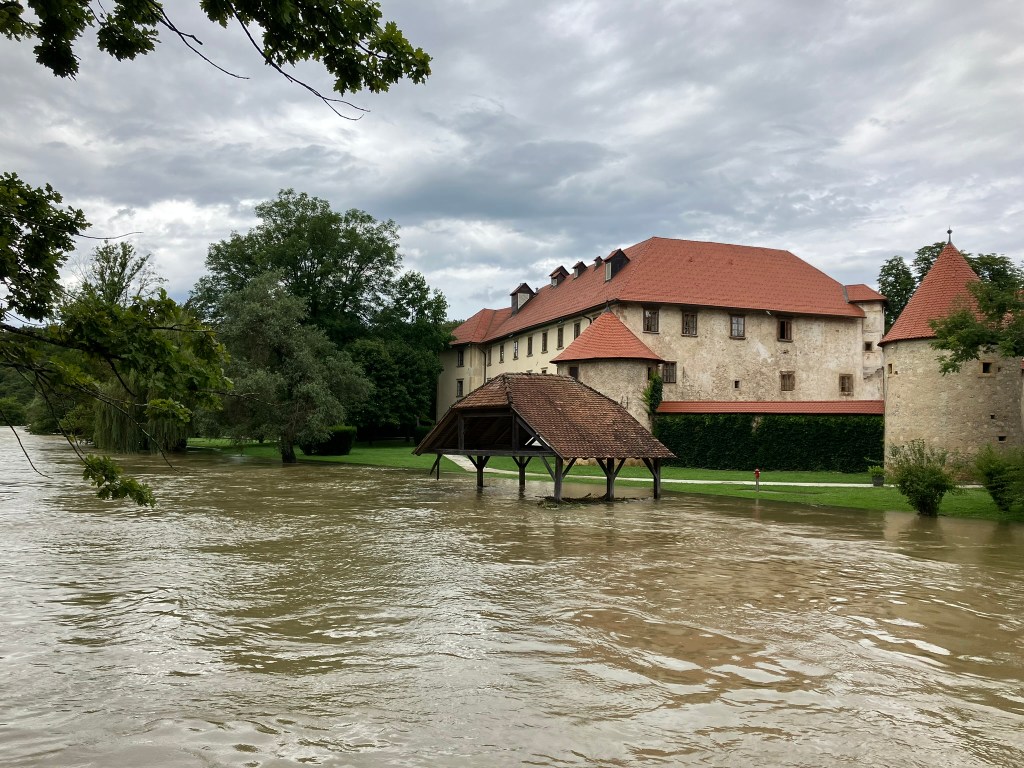
Otočec Castle on the Krka River, photographed in the wake of massive storms. This is in the south of Slovenia; flooding was much worse in the north and east.
Many of the communities in river valleys were completely inundated, and the damage is estimated to about 7 billion euros. While all of the loss was distressing, the response of Slovenes to the flooding was quite impressive. A day of action was called – an impromptu national holiday – for Slovenes to help with the relief and clean up. Almost immediately after the worst of the storms, EU leadership was in Slovenia to assess the damage (and get the photo op, of course), and they pledged billions of dollars in aid. It was heartening to see.
Dobrodošli v Velenje! (Welcome to Velenje)
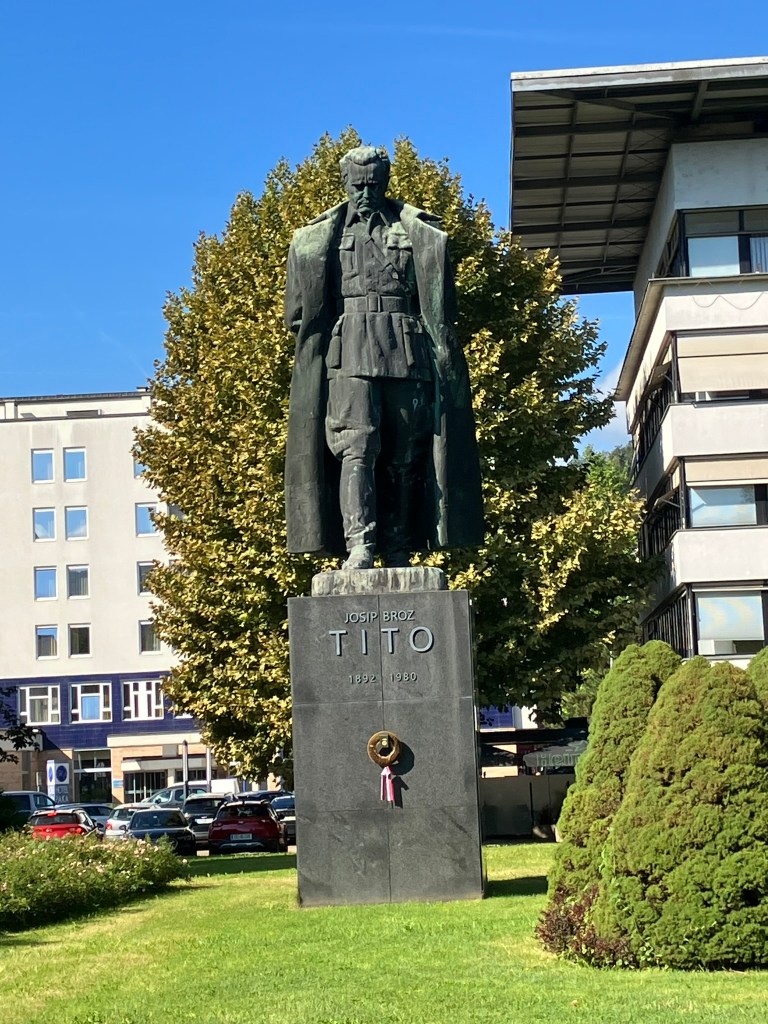
Unlike a lot of Slovenia, Velenje hasn’t gone out of its way to “cancel” the former Yugoslav dictator Josip Broz Tito. City Hall sits at #1 Tito Square, and a large statue of the man sits across the square. Unlike the more medieval centers you experience in other Slovene cities, Velenje has more of a socialist modern look to it. The coal mine was established in 1954, and the city largely grew up around it, so most of it is relatively newly built. The center of the city is clean, tidy, and pleasant, and there are outdoor cafes, a farmers market, and lots of the usual shops all around.

Beautiful socialist-modern performing arts center on Tito Square.
I met with Karla and her colleague Iztok, the director of the City of Velenje, in City Hall (after shaking hands with the Mayor on the way in). It was fun to talk to civil servants who are passionate about their jobs and clearly relish the idea of problem solving. The plan to close the coal operations is now a done deal, a decision that was made by the Slovene government. Now it’s up to the local government to transition the local economy away from one largely dependent on the coal without losing the population. Additionally, they need to replace the space and water heating that comes from the district heating system.
Transitioning Velenje Out of the Black and into the Green
About 5,000 people work directly or indirectly on the coal operations. According to Karla, the federal government will take care of those who are directly employed through the EU’s “Just Transition Fund”. But this isn’t enough to ensure Velenje remains a thriving city. The concern for the city is the impact to all of the other businesses that depend on those people. Other coal towns in Slovenia that decommissioned their facilities have emptied of many inhabitants. So diversifying the economy is very important.
The city already hosts Gorenje, an appliance manufacturer, as well as Tiki HVAC, a Swedish heat pump manufacturer. They also just hosted the annual “Metal Days” festival for the first time a few weeks ago, which was moved from another small Slovene town. Reportedly it all went well, except for the heavy rains ruining one day of it. Apparently there are some pharmaceutical companies also interested in setting up shop in Velenje.
Clean Heat for the People
My last responsibility for the CPUC was overseeing “TECH Clean California,” a program that is focused on replacing individual gas furnaces and water heaters with electric heat pump models. California has a goal to install 6 million heat pumps by 2030. This is a key part of California’s green transition, and the state and the feds are spending hundreds of millions of dollars on the task, most of that spent on incentives. It’s a house-by-house effort.
Decarbonizing Velenje’s heat is a completely different task, because they have district heating. This is common in Europe, but rare in California. A district heating system has one main source of thermal energy (in Velenje’s case a coal power plant), and underground pipelines to move the thermal energy into all of the city’s buildings. This provides a steady stream of warm air and hot water. A district system makes the task of decarbonizing the buildings somewhat easier—instead of retrofitting each individual home, the city only has to convert one facility, albeit a big and complex one. Many homes (like ours in Ljubljana) have no furnace or water heater.
Converting such a big facility is easier said than done. When the coal facility was built in Velenje coal was so cheap they used to tell people that if things got too warm in their homes to just open windows, because the heat was going to keep flowing. Now Velenje is grappling with how to replace this steady source of polluting energy.
They are in the beginning stages, and are considering some combination of solar, biomass, and industrial scale heat pumps to keep things warm. They are also looking into efficient building retrofits, since most homes in Velenje are below the efficiency standard for Europe. I did mention to them the potential of ceiling fans to reduce the need for air conditioning in warm weather. Unlike the U.S., ceiling fans are rare throughout much of Europe, but are a cost effective way to keep inhabitants comfortable.
A Short Tour of Lake Velenje … and Kunta Kinte
After our meeting, a couple of other city hall staffers, Ana and Anze, took me on a short tour of Velenje. We went to Lake Velenje, an artificial lake created as a side effect of lignite excavation. This lake, and the two adjacent to it, used to be rural settlements that sunk disappeared under water. At one point, it was loaded with toxic coal ash, but in recent years the city undertook an extensive remediation project. The water is now clean enough to swim in, and the whole area has been turned into a big recreation area (and the site of the Metal Days concert). There is a big stage for performances, a viewing platform, and numerous cafes along the lake shore. Apparently it’s quite a scene on warm weekends.
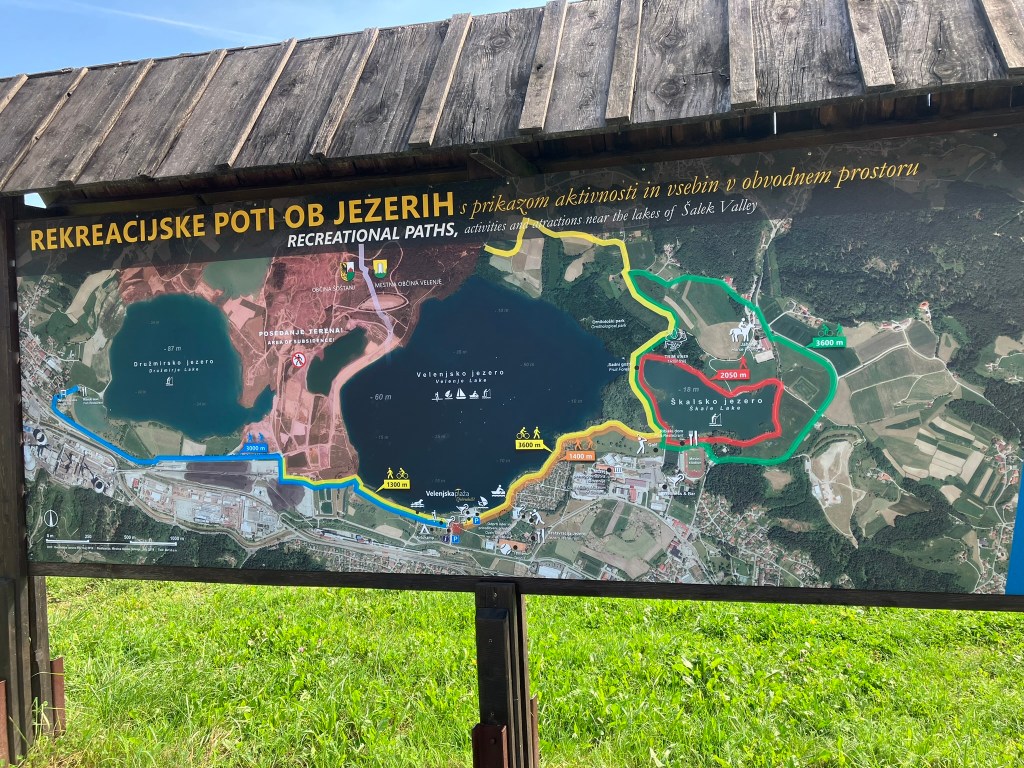
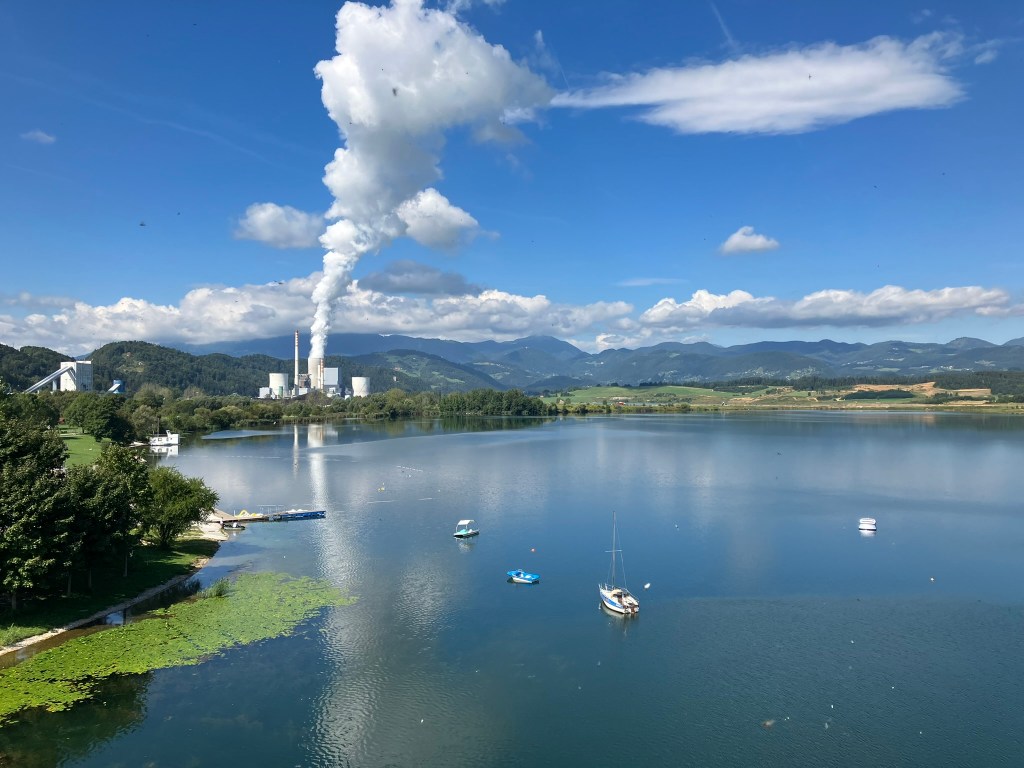
Lake Velenje.
They also showed me Kunta Kinte, a village of 250 small weekend homes along the lake. This was built in the 1970s as a place for the coal workers to get away and recreate. And yes, if that name sounds familiar, it was named after the hero of Alex Hailey’s Roots. It seems that mini-series and book about slavery in the U.S. made an impact in Yugoslavia. Who knew?
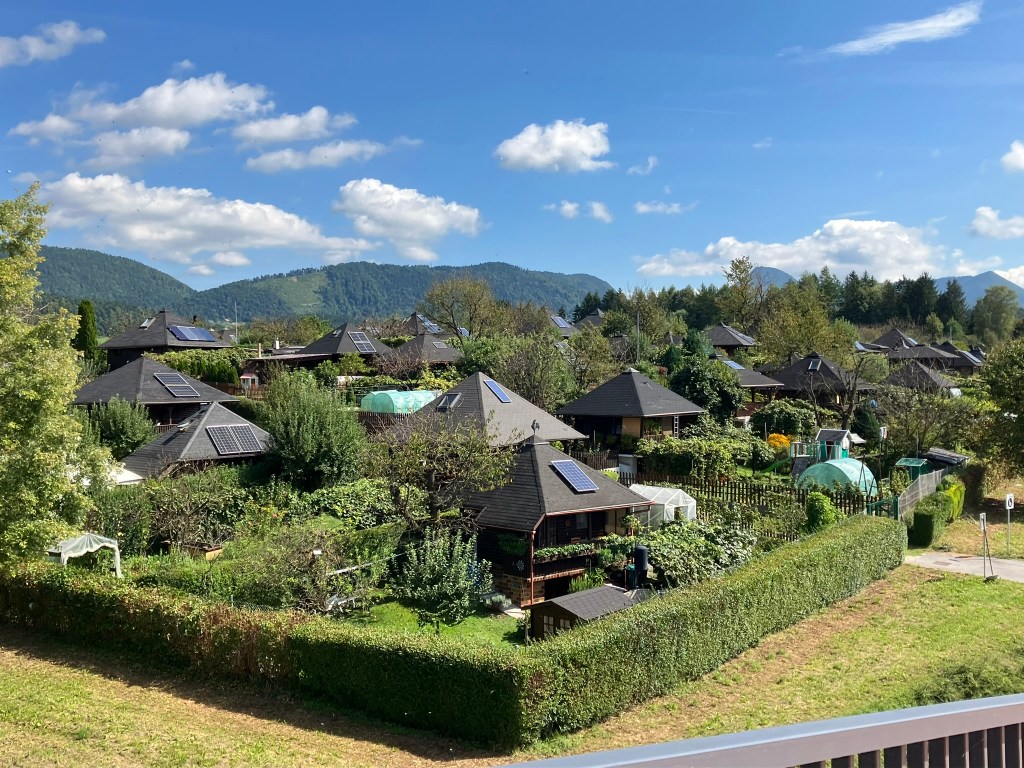
Kunta Kinte. The village, not Alex Hailey’s ancestor.
And that was how my short trip to Velenje ended. I look forward to seeing how the city manages its transition. If they do things well, Velenje could very well be a model community for decarbonization.
City of Velenje’s website: https://www.velenje.si/


 The Js are Silent
Leave a reply to elizabethstampe Cancel reply