One of the last things we did before leaving Oakland was sell our Honda Fit with the understanding that we were going to try to go carless once we got here. We knew there might be some challenges with not having a car, but we’ve been pleasantly surprised at how easy it is. Given the expense of car ownership, and the shortage of parking around here, after two months I can say that it’s easier not having a car than it would be if we did have one. Because we have a few friends who are “urbanist” in nature (or maybe just public transit nerds), I thought I’d give a little tour of all of our transit options.
First of all, everything we need is close at hand. Just on our block there is a grocery store, a bakery, a small subterranean farmers market, an office supplies store, a pharmacy, Thai take out, and several cafes. Go another block or two, and there’s a wine shop, two more grocery stores, two more bakeries, two brewpubs, my language school, and other stuff. As far as I can tell, this is how things have been since the 1960s when our apartment building was constructed. So a lot of things are just outside our door. There’s a lot of talk these days about 15 minute cities, but where we live, especially in the Bežigrad neighborhood, feels more like a 5 minute city.
So, on with the rundown of our transit options, in the order of how often we use them:
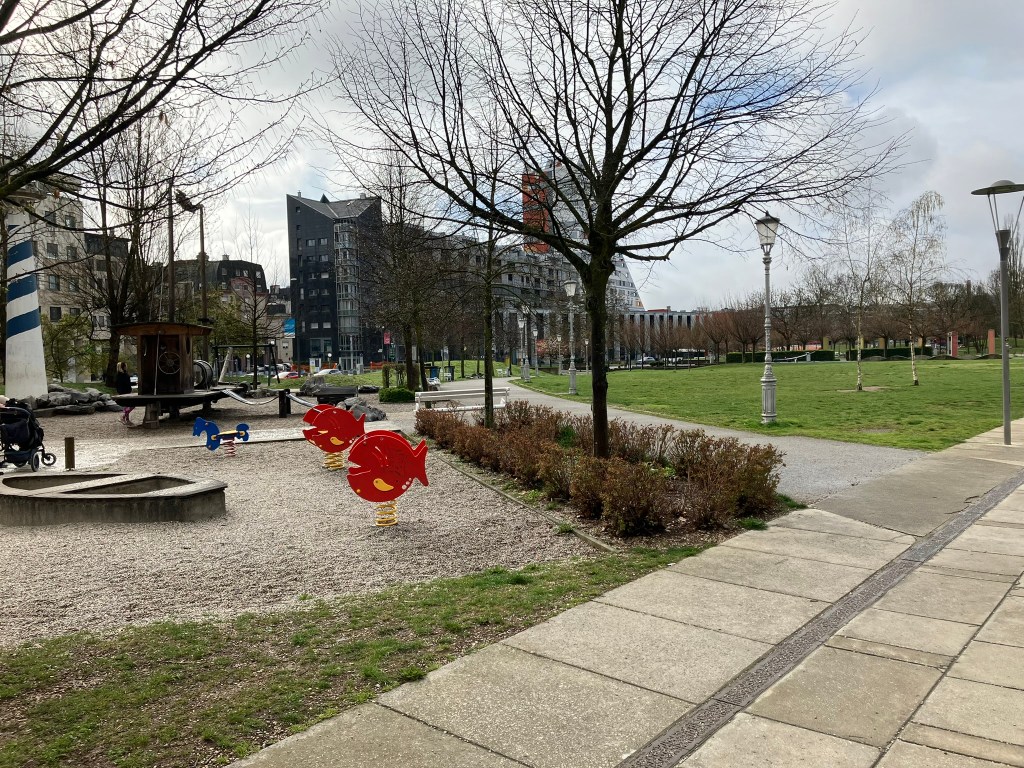
Walking. By far we get around with our feet more than anything else. Ljubljana is mostly flat and has a compact, manageable Center district where a lot of the fun stuff is. There are people walking all the time, everywhere, so the sidewalks are always a lively scene. The photo above is Severni Mestni park, which connects our apartment with the train station and, beyond that, the city Center. It’s a nice place to stroll through. This photo was taken early in the morning–by the afternoon it’s teeming with families using the pretty cool playground. Cost: Free, although our shoes are wearing out faster than they used to.
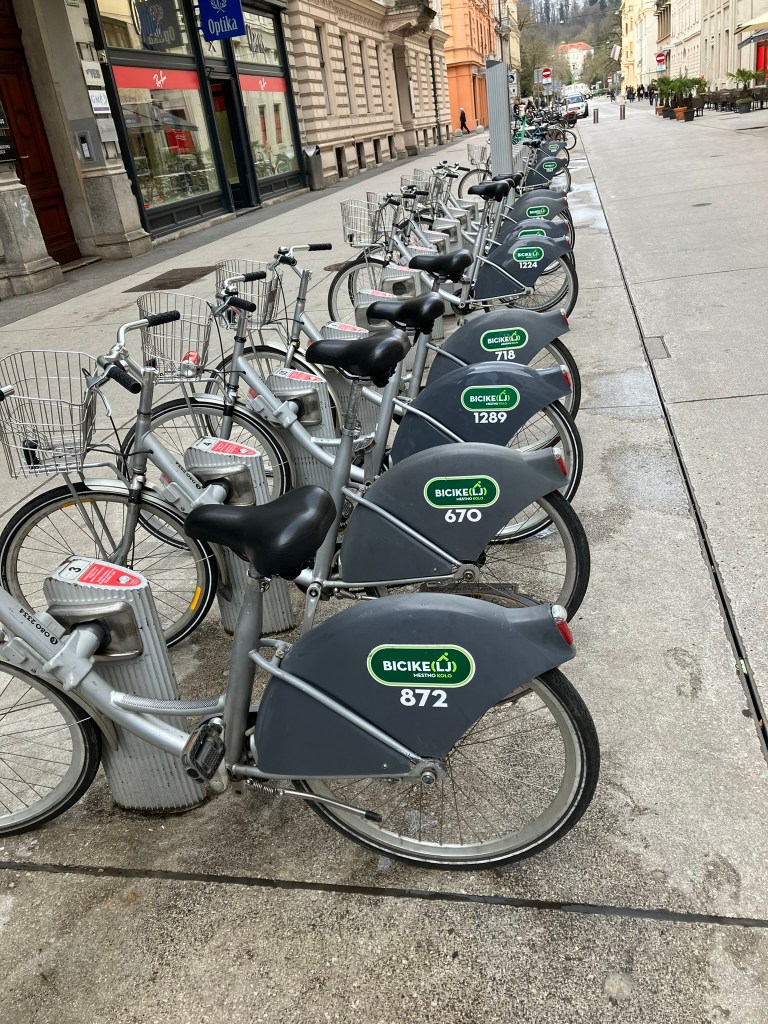
Cycling. We are still waiting for the container of our stuff to arrive, which includes our bicycles. In the meantime, we’ve signed up to use these share bikes that are located around town. They’re heavy one-speeds, but they usually work fine as most of where we need to go is flat. The downside is that sometimes the bike pods have no bikes. But they’re working just fine until our own bikes arrive.

The bike infrastructure is nowhere near the quality of infrastructure in the Netherlands, but it’s much better than what we’re used to in Oakland. Outside the Center there are many dedicated lanes for bikes. Inside the Center can get a bit dicey — the city decided that pedestrians and cyclists should share the sidewalks, which are already pretty narrow. The photo above shows an example of this with delineations for bikes. It’s not ideal, but as a cyclist it somehow works OK. Bikes have bells and peds are aware. But still–it’s not Amsterdam! (Side note: like Amsterdam, electric stand-up scooters and moped/vespa scooters also use the bike lanes – not great!) Cost: Free for the first hour, than 1 euro per hour (Bicike(LJ).
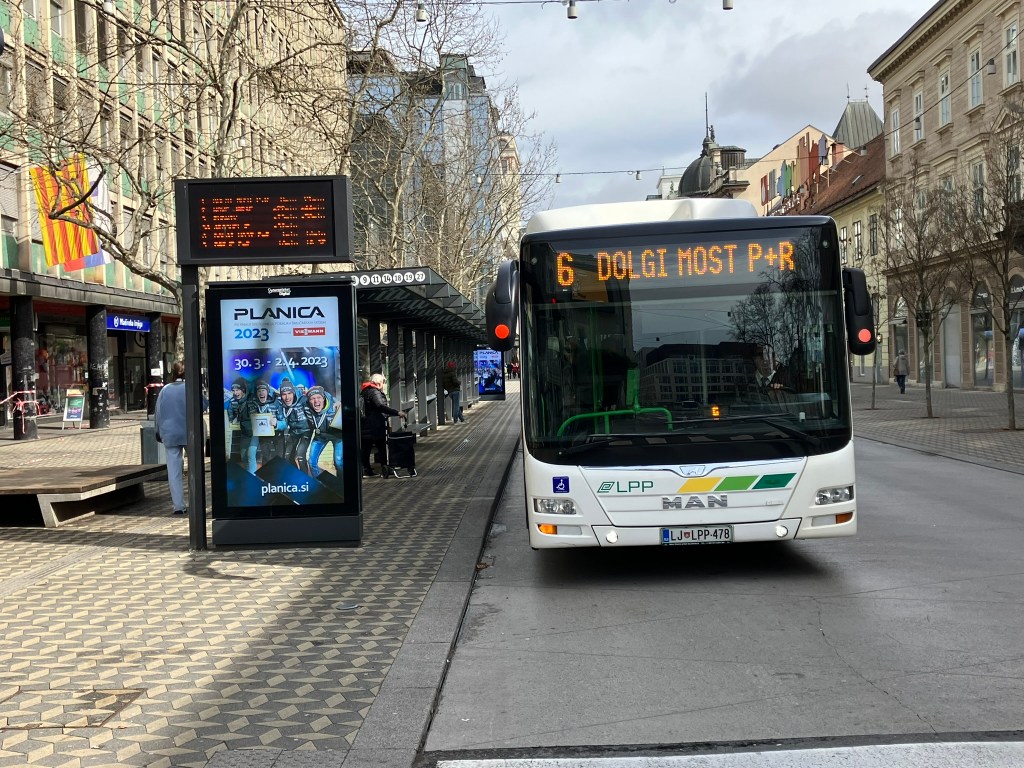
City Buses. Ljubljana’s not big enough to support an underground metro system. At one time in history there were streetcars, but like in many cities, they were torn out after WWII to make room for more cars. Too bad! But at least they now have a very good bus system. The more popular bus lines run frequently, the buses are clean, and the rides go quickly as the on- and off-boarding happens efficiently. They’re well used–there’s always a good multi-generational crowd on them. One of the coolest features is that most bus stops have an electronic board that indicates when the buses are arriving (as you can see in the photo). We live a stones throw from two stops with several bus lines and can get pretty much anywhere on bus. Cost: 1,30 euro per 90 min ride, transfers included.
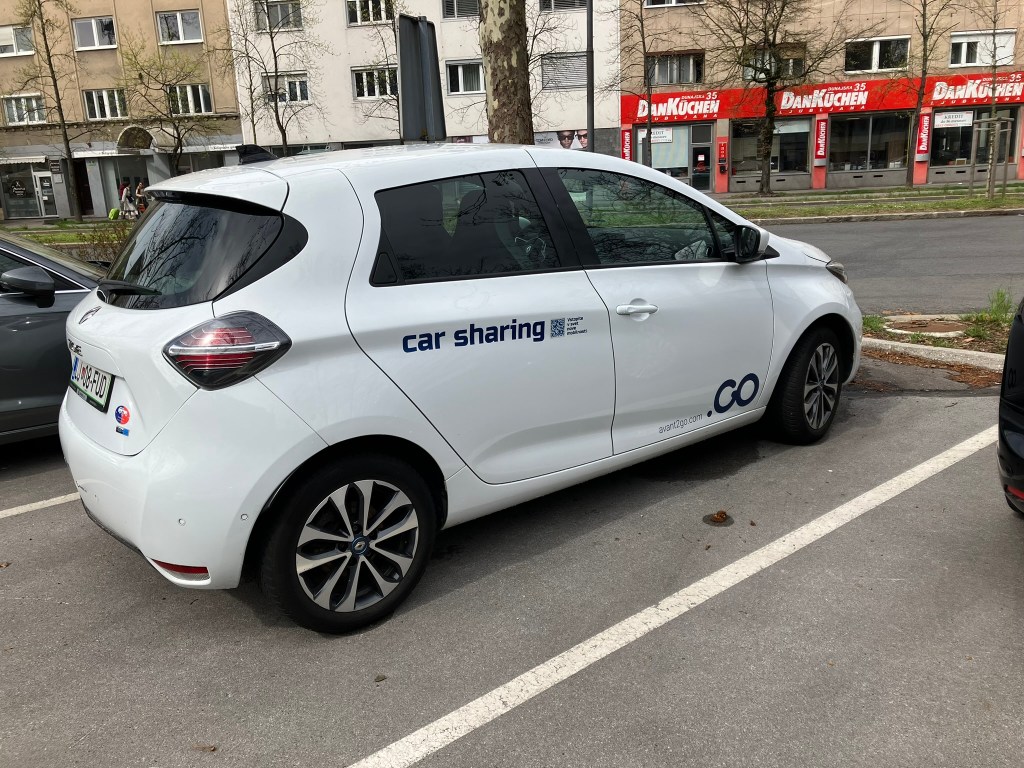
Car Share. Occasionally we need a car, mostly to run errands at the shops that are outside the Center and/or we are buying large items or quantities. Avant 2 Go is a car sharing service that has pods all around LJU, and there are 3 pods within walking distance of our apartment. The cars are all electric, and range from tiny Smart cars to BMW and Renualt hatchbacks. You drive them, and return them to any pod with available space. Cost: 2 hours cost about 20 euros (charges dependent on time and distance).
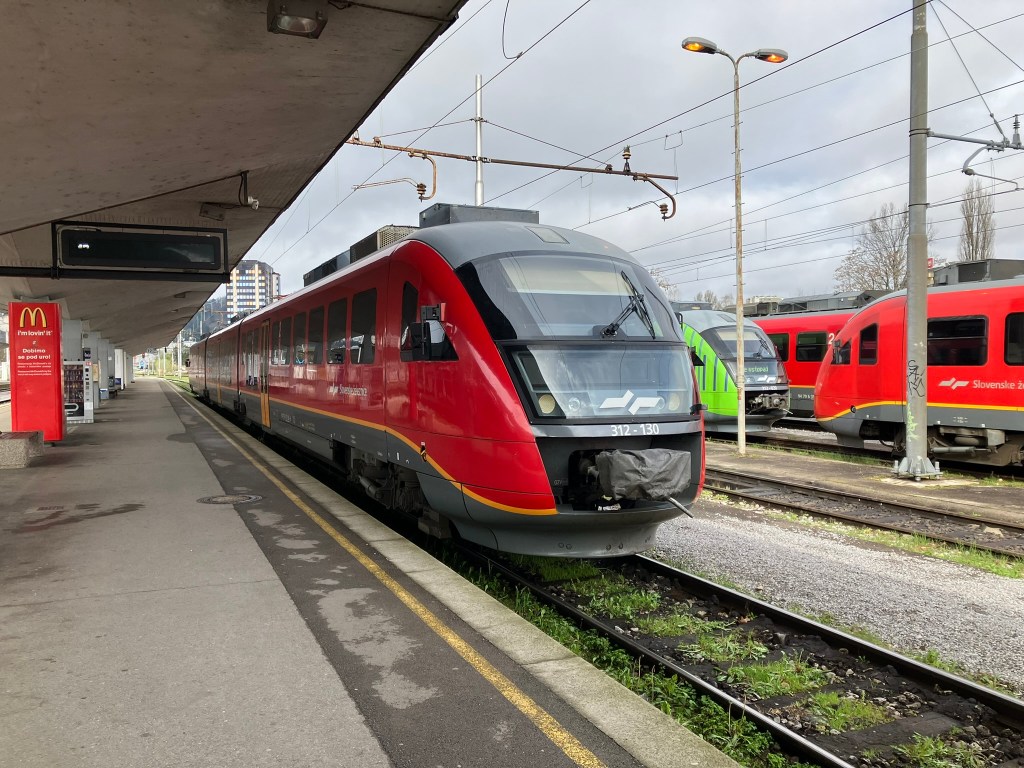
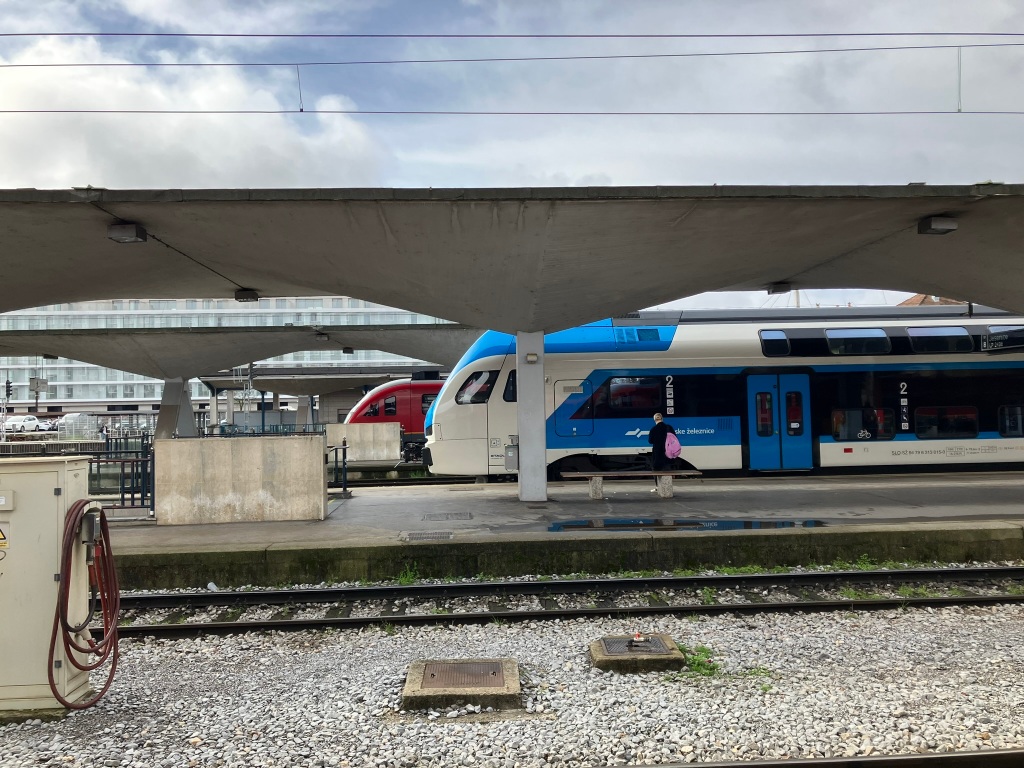
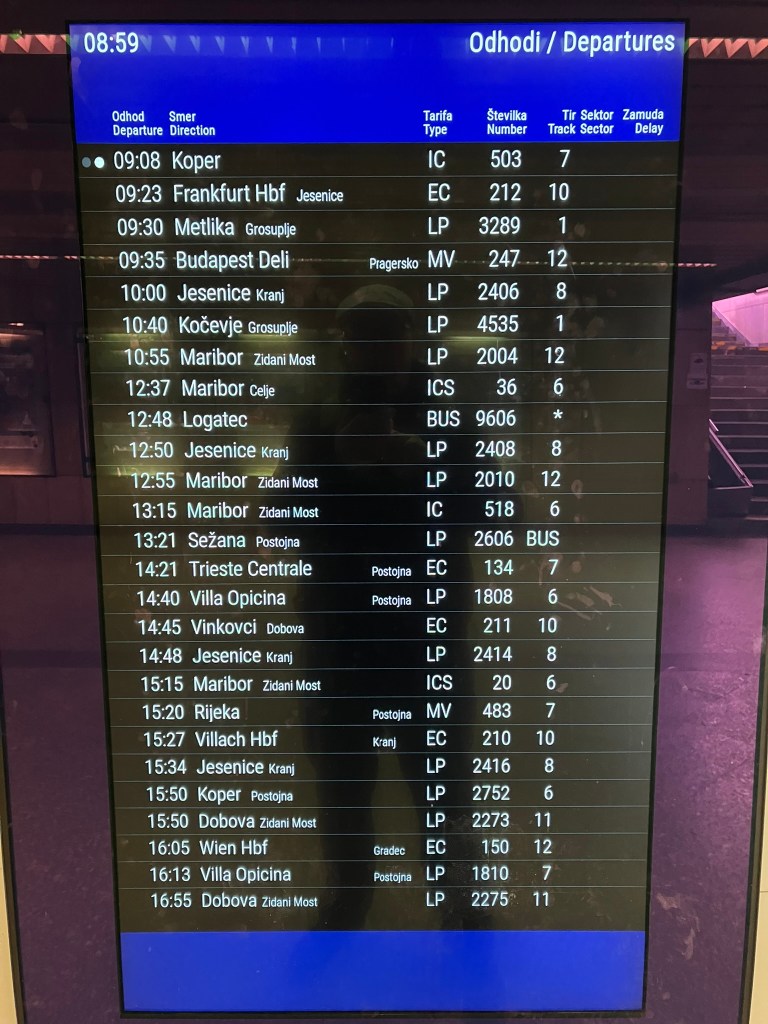
Trains. Slovenia has a national rail service that the locals tend to complain about. As our friend Chris said, train service was better during the Habsburg Empire. No doubt this is true, and certainly we keep hearing that the government had been neglecting the trains when cars were coming into favor. We, however, find that the train service is far better than what we had in California (No shade on Caltrain or Amtrak, shout out to Capital Corridor!). Train routes go to all of the major Slovene cities, and international trains link Ljubljana with all of the neighboring countries, as you can see from the departure board below.
The trains we rode have been clean and on schedule. Recently the EU granted Slovenia hundreds of millions of euros to upgrade the train network. Most of this is being invested in second rail lines to run parallel to the existing lines for more efficient operation. Cost: Inexpensive! We took a train to the eastern part of Slovenia — about a 2 hour ride — for about 10 euros (5.20 euros each!).
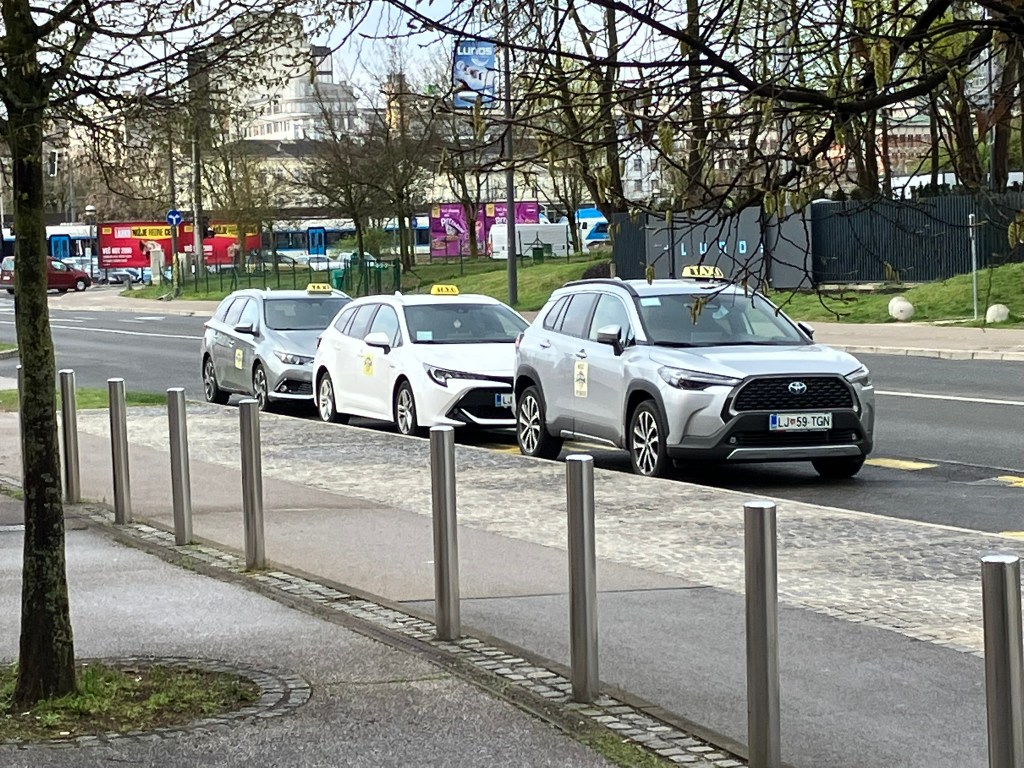
Taxis. Yes, those are taxis, not Ubers, and they’re all around the city. As I understand it, when Uber came knocking to provide service to Ljubljana, the powerful taxi driver lobby fought back. So no Uber 🙂 But what they do have is an Uber-like app in order to make calling a taxi easy. The app calls a taxi based on your location, and that’s all it does. You pay the driver directly. Cost for a cross-town ride: 8 euros. But it would have been cheaper had I not made a typo when I put in our address–it turns out there’s a “Perčeva” street in addition to our “Peričeva” street.
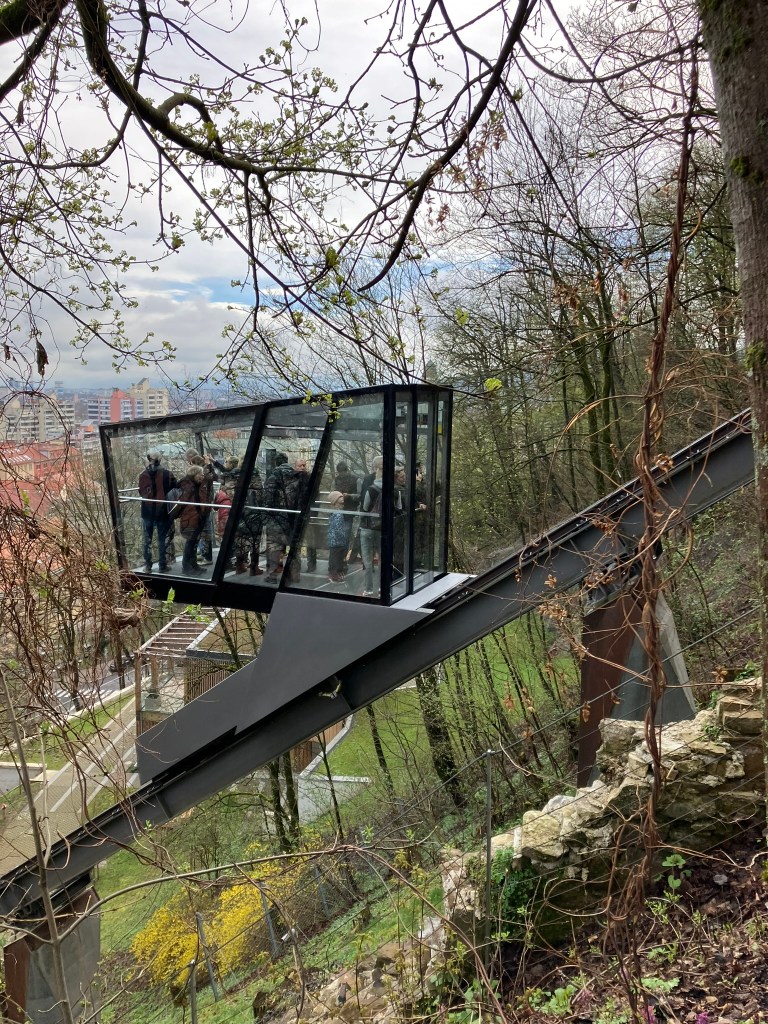
Funicular. This I’m just throwing in for fun (since that, after all, is the first 3 letters of funicular.) This one goes up to Ljubljana Castle from the Center, catering to tourists. The alternative is to walk, which is a short but steep hike. Cost: 3.30 euro/per person.
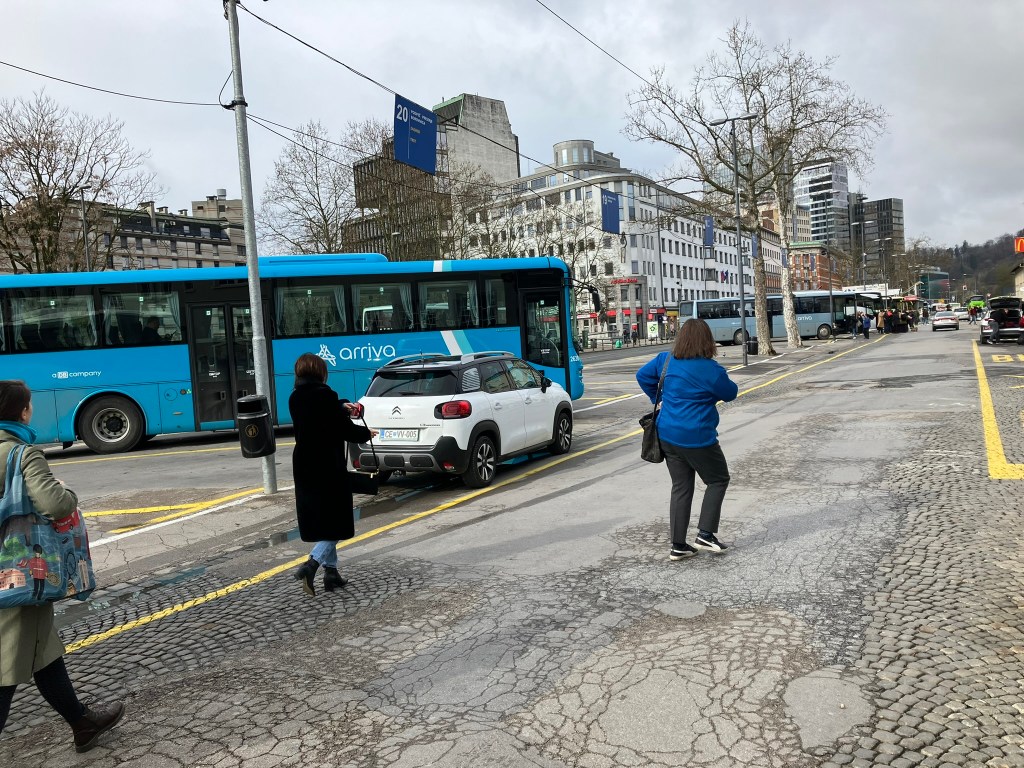
Regional buses. We haven’t ridden these yet, but they are useful for getting to some of the locations that the trains don’t serve. They leave from the main train station, so all the transit is in one place. Krista did take a “Flix Bus” to Florence a couple of weeks ago–that worked out fine. Cost: A bus to Lake Bled, a popular destination about an hour away, is 10 euros. (Flixbus cost less than 70 euros round trip).
So those are all of the options. And of course when all else fails, there are car rental agencies, also located at the train station, which can come in handy for day trips or weekends away.
Remember, keep the rubber side down!


 The Js are Silent
Leave a reply to Rona Banaga Cancel reply